%20png%20copy.avif)

Most advice about last touch attribution starts in the wrong place. It asks whether the model is accurate enough. The more important question is what your company does after seeing the report.
A clean dashboard that gives branded search, retargeting, or a sales nurture email full conversion credit doesn't stay in the analytics team. It reaches the CFO, the board, and the next budget cycle. The model then becomes a funding mechanism. It tells leadership which programs deserve more money and which ones can be reduced.
That's why last touch attribution is dangerous for B2B SaaS. Its biggest failure isn't that it oversimplifies the buyer journey. Its biggest failure is that it makes the oversimplification decisive.
Last touch attribution is not just a measurement choice. It is a budget rule disguised as a reporting method.
The model assigns 100% of conversion credit to the final interaction before a lead, opportunity, or deal closes. Every earlier interaction receives zero credit. The calculation is simple. The funding consequences are not.
B2B teams often use one performance view for two separate decisions. Finance wants a defensible account of what happened. Growth leaders need to decide what to fund next. Last touch can answer the first question narrowly, but it becomes dangerous when leadership uses that same answer to set the next budget.
The final touch is often the easiest interaction to observe, not the interaction that created the buying decision.
Branded search may appear immediately before a pricing-form submission. Retargeting may reach a prospect who has already read the comparison page, attended a webinar, or spoken with sales. A nurture email may prompt the meeting booking only after a buying committee has spent weeks building confidence.
The report gives these closing mechanisms a clean story, so the budget follows that story. Awareness content, peer-review materials, analyst education, founder-led distribution, and category creation look inefficient because their influence occurs earlier and across multiple people.
Treat last touch as a diagnostic, not a capital allocation rule. Guidance on B2B marketing budget allocation by ROI reinforces the practical principle: a channel that captures demand isn't necessarily the channel that generated it.
The model creates a predictable loop:
For a while, the dashboard may show better efficiency. Pipeline quality later exposes the cost of starving demand creation.
A 2024 survey cited by eMarketer found that 78.4% of marketers still used last-click attribution and web analytics to measure media effectiveness, while 63.5% said last-click didn't match how people shop (eMarketer's summary of last-click attribution data). Adoption persists because the model is easy to explain. That convenience does not make it suitable for funding a complex B2B buying journey.
Use last touch to ask, “What directly preceded this conversion?” Do not use it to decide, “Where should we place the next dollar?”
Last touch is a rules engine, not a verdict on what created demand. It records the final eligible interaction and assigns the result according to the boundaries your team configured.
The system first collects interactions it can connect to a person, account, or opportunity. Depending on the implementation, those signals may include cookies, IP data, logged-in sessions, form submissions, campaign parameters, and CRM records. Known contacts are matched to CRM entities through an email address or another identity key.
The system then orders captured interactions by time. It applies the selected lookback window, removes events outside that window, finds the final eligible touch, and assigns that touch 100% of the conversion credit. The associated channel, campaign, landing page, or content asset receives the full result. Earlier interactions receive no fractional credit.
The calculation is mechanical. Its boundaries are deliberate choices:
The model applies these rules to incomplete observations. Change the rules, and the reported winner can change.
A consumer purchase may involve one person and a short path. A B2B SaaS purchase can involve several stakeholders, repeated sessions, sales activity, procurement, security review, and offline conversations. The person who submits the final form may not be the person who first found the product or shaped the internal recommendation.
A long B2B buying journey can contain many recorded touches, while last touch gives full credit to one interaction. That arithmetic accurately identifies the selected event, yet it represents only a narrow part of the journey. The reporting output can therefore look precise while leaving important influence outside the model.
Campaign tracking must also preserve each interaction's identity. A documented UTM naming convention for B2B marketing helps teams classify source, medium, campaign, and related parameters consistently. Clean tracking improves the record. It does not make a single-touch model causal.
Use last touch to identify the final tracked interaction inside a defined system. Treat that result as a description of the closing step, not proof that the step created demand or that uncaptured activity had no influence.
Last touch attribution earns its place as a diagnostic tool, not as the judge of your entire marketing budget. It can show what happened immediately before conversion. It cannot decide which earlier programs deserve continued funding.
Use it for focused bottom-funnel questions. Which branded search terms appear before a pricing request? Which retargeting audiences return before a demo? Which sales enablement asset appears before an opportunity advances? Which nurture message helps a known lead take the next documented action?
Those questions are specific and answerable. Last touch is fast, easy to explain, and useful when the decision concerns the final step itself. The mistake is turning that narrow answer into a broad budget thesis.
| Use Case | Trustworthy as Diagnostic? | Safe as Budget Input? |
|---|---|---|
| Evaluating branded search efficiency | Yes, for understanding capture behavior | No, not by itself |
| Reviewing retargeting before a demo request | Yes, for inspecting late-stage influence | No |
| Assessing a sales enablement asset used near close | Often, if CRM activity is complete | Only alongside journey evidence |
| Identifying the final nurture interaction | Yes, for conversion mechanics | No, if earlier demand creation is unmeasured |
| Planning content, events, or category education | No, the model hides early influence | No |
| Setting the full paid media mix | No, it rewards proximity to conversion | No |
A buying committee may read an analyst report, watch a product webinar, review a comparison page, and discuss the category internally. Procurement later searches the company name, clicks a branded ad, and submits the pricing form.
Last touch will correctly identify the branded ad as the final tracked interaction. It will not show whether that ad created demand or merely gave an already-convinced buyer a convenient route to act.
The budget response changes accordingly. Treating the report as proof that branded search created the opportunity can lead the team to increase search spend while cutting the analyst content and webinar program. That decision may improve reported efficiency while weakening the conditions that produce future branded searches.
Branded search, retargeting, and nurture email receive disproportionate credit because they commonly appear close to conversion. As branded search and retargeting can look artificially strong in last-touch reporting, their apparent strength may reflect demand capture rather than demand creation.
A broader view of channel roles is outlined in this integrated media strategy for B2B.
Use last touch to improve the handoff into conversion. Use broader evidence to decide whether your demand engine deserves funding.
Separate those decisions. A conversion-rate team can use the final interaction to improve mechanics. A CMO deciding whether to fund category education, content, events, or paid media needs the recorded journey, pipeline quality, sales feedback, and controlled tests where possible. The model should sharpen execution at the bottom of the funnel, never justify starving the top.
Every attribution model encodes a budget decision. Last touch is the simplest theory of how deals close, presented through the cleanest dashboard. Its real risk is not merely inaccurate measurement. It directs funding toward the interaction nearest to revenue and away from the work that creates future demand.
First touch assigns all credit to the interaction that introduced the buyer. It shows which channels create initial awareness, but it can starve the conversion work that turns awareness into qualified pipeline. For a SaaS company building category recognition, first touch helps identify entry points. It should inform the media budget, not control it.
Linear attribution distributes credit equally across every recorded interaction. Earlier touches remain visible, yet the model assumes that each touch plays the same role. A pricing conversation with the economic buyer and a passive page visit may receive an identical share even when one materially changes the buying process.
Position-based or U-shaped attribution gives the greatest weight to the first and last touches, commonly assigning 40% to each and distributing the remaining 20% across the middle interactions. The structure matches a familiar B2B journey: one interaction creates interest, another closes the loop, and the middle builds confidence. It remains an imposed rule, however, rather than evidence of causality.
Time decay assigns more credit to recent interactions. That can reflect late-stage acceleration, but it reproduces last-touch bias through a more elaborate formula. It performs poorly when early education is what makes a later sales conversation possible.
Data-driven attribution applies observed paths and algorithmic analysis to estimate contribution. It can help when conversion volume is sufficient and tracking remains consistent. Smaller pipelines face a black-box problem. The output may look polished while relying on too few comparable journeys to support strong conclusions.
| Model | Credit Shape | What It Rewards | Where It Breaks | Best Fit |
|---|---|---|---|---|
| Last touch | 100% to the final touch | Demand capture and closing actions | Erases earlier influence | Short, simple journeys or bottom-funnel diagnostics |
| First touch | 100% to the opening touch | Awareness and discovery | Undervalues conversion work | Early demand-creation analysis |
| Linear | Equal credit across touches | Broad participation across the journey | Treats unequal touches as equal | Teams needing a neutral baseline |
| Position-based | Heavy weight on first and last | Discovery plus conversion | Assumes the edges matter most | Established B2B teams with multi-stage journeys |
| Time decay | Increasing weight toward recent touches | Late-stage acceleration | Overstates recency | Sales cycles where recent activity genuinely changes intent |
| Data-driven | Algorithmic allocation | Patterns associated with outcomes | Requires volume and trustworthy inputs | Mature teams with reliable data systems |
The Come Together Media LLC attribution guide explains these trade-offs and helps leaders separate attribution theory from agency reporting language. Use that distinction when deciding which model should guide execution and which decisions require broader evidence.
Pre-PMF teams should stop searching for attribution precision they cannot support. Use disciplined source tracking, founder and sales interviews, account-level notes, and simple first-touch and last-touch comparisons to understand how demand enters and progresses.
Series A and B teams can add linear or position-based views once CRM stages and campaign tracking are reliable. The objective is not a perfect percentage allocation. It is to prevent one endpoint from deciding every budget conversation.
More mature teams with meaningful conversion volume can test data-driven approaches. Keep a transparent model beside the algorithm so leaders can question outputs that conflict with buyer reality. A practical multi-touch attribution framework for B2B teams can support that comparison without turning the dashboard into an academic exercise. Choose the model that matches the evidence your company can produce, then protect funding for the interactions that the model cannot fully capture.
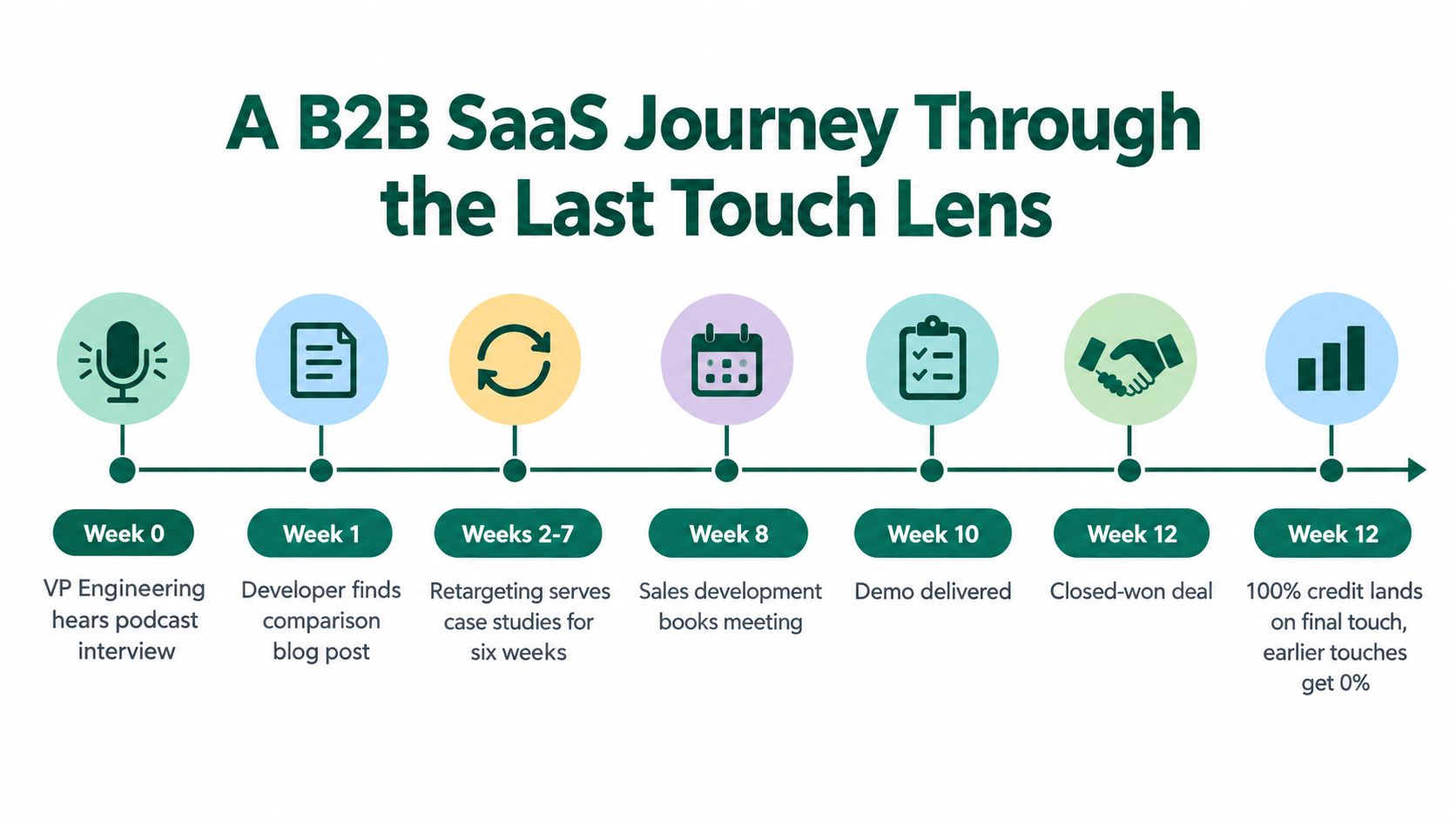
A representative B2B SaaS deal rarely begins with the interaction that closes it.
At Week 0, a VP of Engineering hears a podcast interview about a problem the product solves. In Week 1, a developer finds a comparison article while researching possible approaches. Across Weeks 2 through 7, retargeting ads serve case studies and product education. The buying group is forming a view, but no one has submitted a form.
During Week 8, a sales development representative starts a three-week outbound sequence. A webinar demo lands in the middle of that period and gives the team a chance to see the product in context. By Week 10, the evaluation has moved into a live demo and internal discussion.
The day before signature, procurement searches the brand name, clicks a paid search ad, and submits the pricing form. Last touch assigns 100% of the credit to branded paid search.
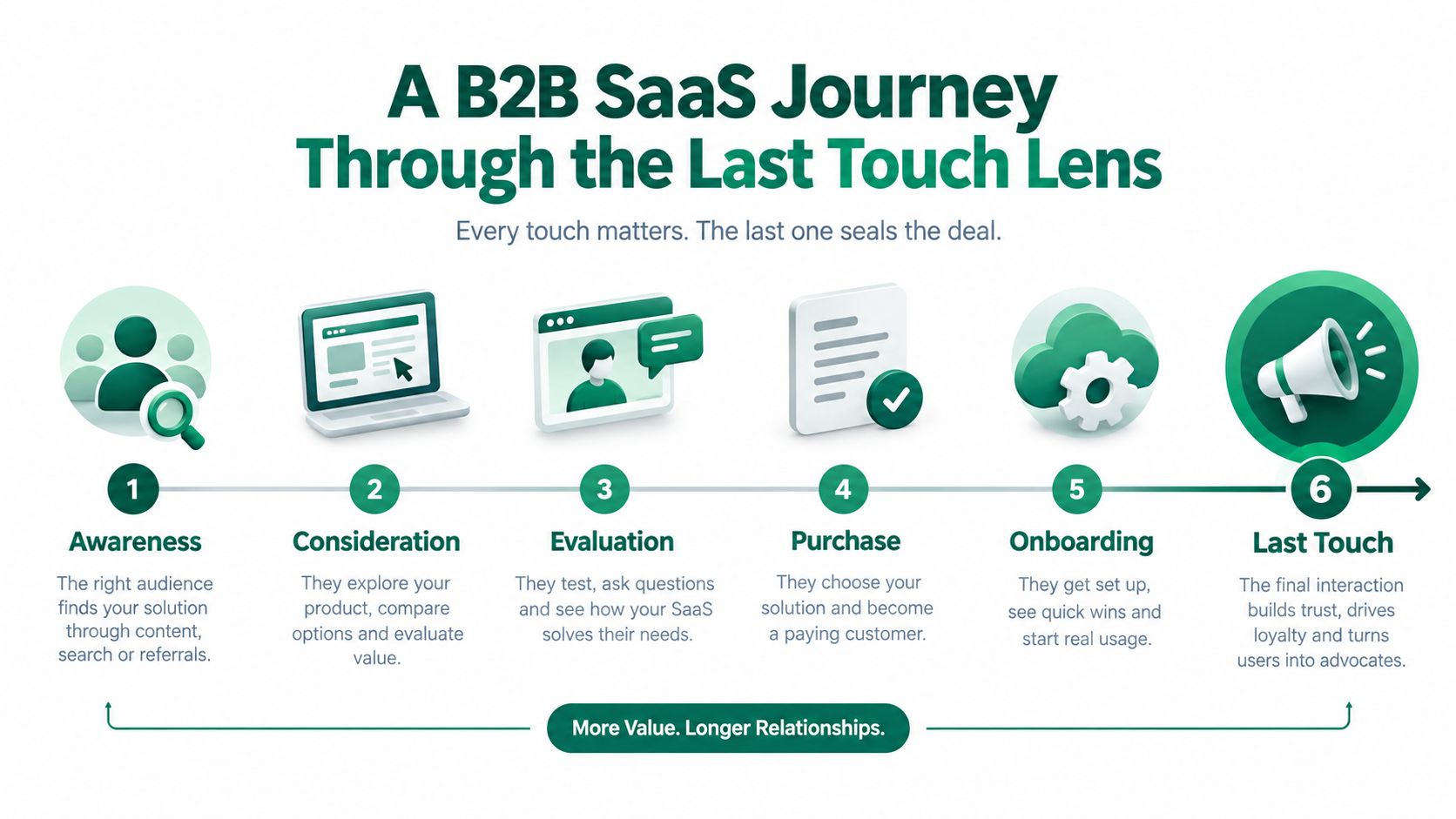
The report says paid search converts. The podcast, comparison content, retargeting, outbound sequence, and webinar appear unrelated to the closed-won event.
The marketing response is predictable. Increase branded search because it has visible conversion efficiency. Reduce the podcast because it has no credited deals. Cut comparison content because it assists but doesn't close. Treat retargeting as a lower-priority program even though it kept the product present during evaluation.
For a quarter, the dashboard may improve. Then the pipeline thins. Fewer people discover the category through the podcast. Fewer developers encounter the comparison page. Fewer buying groups arrive at the point where a branded search click can harvest intent.
Last touch doesn't just mislabel the deal. It changes which future deals are possible.
The outbound sequence still matters in this example, but it shouldn't be evaluated in isolation. Teams planning account-based programs need to understand signal quality and timing, including how to optimize account based outreach timing around genuine buying activity rather than treating the final form submission as the beginning of intent.
The causal chain is clear:
That route matters. It isn't the whole road.
Many attribution debates start with model philosophy when the underlying records are already unreliable.
A campaign name may be manually rewritten halfway through a quarter, breaking the relationship between URL parameters and the original source. A sales call may happen without a CRM activity record. An in-person conversation may influence the account but disappear from the digital timeline. A self-reported “How did you hear about us?” answer may contradict the captured source without anyone resolving the conflict.
B2B identity creates additional gaps. A developer researches from one device, a VP visits from another, and procurement submits the form from a third. Cookie deletion, cross-device behavior, and separate contact records can split one buying group into disconnected fragments.
Forms also create false confidence. The person who submits a pricing request may work in procurement or IT, while the engaged user who shaped the internal preference never appears in the conversion record. CRM stages can create another distortion when teams apply definitions inconsistently or allow created dates and stage dates to drift.
These issues can corrupt any attribution model. They damage last touch disproportionately because the entire conclusion rests on one final record. If that record is missing, rewritten, or assigned to the wrong contact, the model doesn't merely lose a small part of the story. It may replace the story altogether.
A 2025 attribution report highlights the operational problem: important buying moments often aren't documented, and sales representatives or BDRs may manually update campaign sources based on recency or their view of whether a lead was self-sourced (the 2025 State of Marketing Attribution Report). That is a process failure before it's a modeling failure.
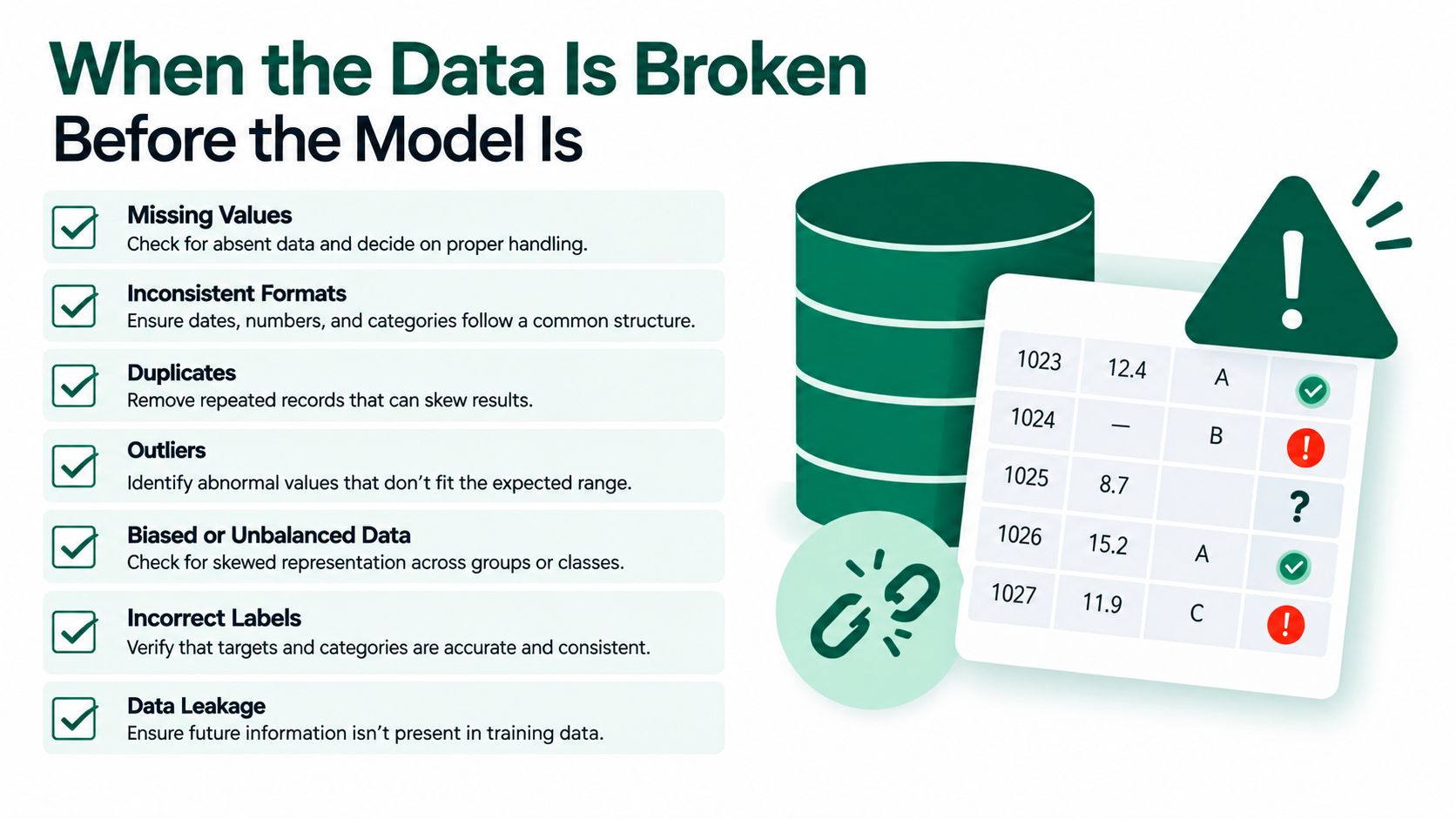
Start with a small audit rather than buying a more complex platform:
Only after that should you argue about linear, position-based, or data-driven attribution. This perspective on broken B2B marketing measurement makes the same operational point: better reporting logic can't compensate for poorly defined stages and incomplete source tracking.
The founder-level verdict is simple: keep last touch as a narrow diagnostic, and retire it as a budget input.
Use it to review the final conversion mechanism. Inspect which branded searches precede form fills, which retargeting messages return known accounts, which sales assets appear before advancement, and which nurture interactions move an active opportunity to its next step. These are useful operational questions.
Don't use the model to decide whether demand creation deserves funding.
A workable operating system has several rules:
The exact ceiling should reflect your stage, sales motion, and channel mix. The point is to prevent the easiest-to-credit channels from absorbing the whole budget by default.

You will lose some of the false precision that makes quarterly slides easy to build. In return, you'll gain a more credible view of what creates demand, what accelerates active opportunities, and what merely captures intent that already exists.
Run the checklist before approving the next budget:
Last touch can tell you what happened immediately before the form fill. It can't tell you what your market needed before that moment. Treating it as the budget authority is how SaaS companies build dashboards that flatter the bottom of the funnel while starving the pipeline that feeds it.
Big Moves Marketing helps B2B SaaS leaders clarify positioning, connect channel activity to pipeline, and build measurement systems that distinguish demand creation from demand capture. If last touch is driving your budget decisions, visit Big Moves Marketing to start a sharper review of your attribution, tracking rules, and growth priorities.



%20-%20white.svg)