%20png%20copy.avif)
Most advice on cmo as a service is backwards.
It starts by defining the role. That’s the least important part of the decision. Founders don’t fail because they misunderstood the label. They fail because they bought strategy without execution, hired seniority without operating rhythm, or outsourced demand gen to people who couldn’t tie activity to pipeline.
The question isn’t whether you need a CMO title on the org chart. It’s whether your company has the marketing leadership required to turn product value into repeatable revenue. In B2B SaaS, that gap shows up fast. Founder-led sales starts to stall. Pipeline quality gets noisy. Messaging drifts. Sales blames marketing. Marketing points to MQL volume. Nobody can explain what’s working.
That’s where cmo as a service can be useful. Not as a cheaper executive substitute. As a way to install decision quality, accountability, and execution structure before you burn time on the wrong full-time hire.
Founders love the idea of a senior marketing hire because it feels like progress. It often creates an expensive layer of ambiguity instead.
The pattern is predictable. Pipeline gets lumpy, growth slows, and the answer becomes "hire a VP of Marketing" or "bring in a CMO." The title sounds like a fix. The operating model rarely is.
Analysts at Gartner found that CMO spend as a share of company revenue has continued to tighten, which means the margin for a bad senior hire is thinner than it was a few years ago. At the same time, top marketing leaders do not last forever. Spencer Stuart has repeatedly shown that CMO tenure is relatively short compared with the time it takes to build a durable SaaS growth system. You are not buying certainty. You are buying a bet.
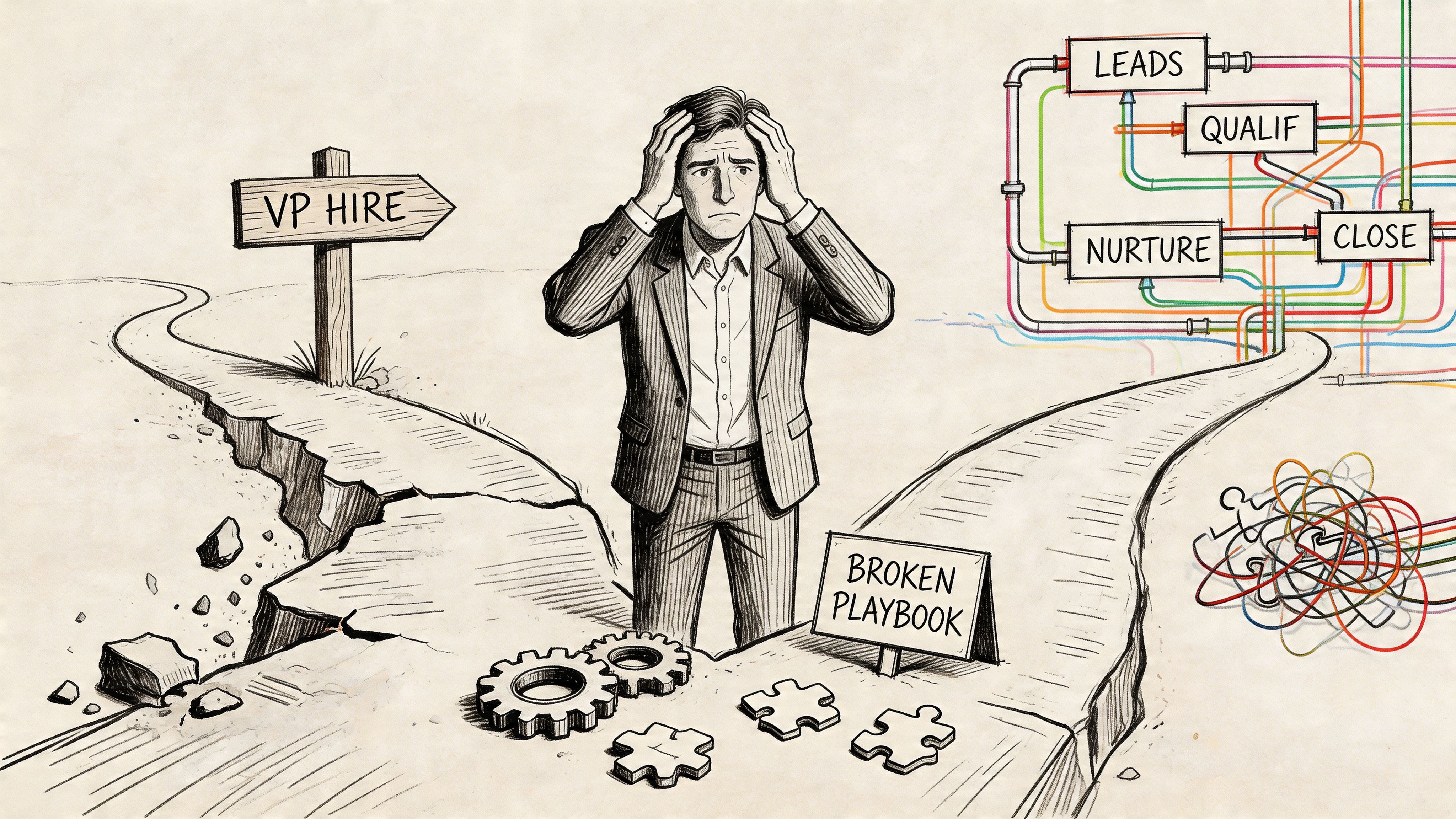
Early-stage and growth-stage SaaS companies rarely break because nobody owns marketing at a senior level. They break because nobody has resolved the hard decisions underneath the function.
These problems look like this:
A full-time executive walks into that situation with the wrong mandate. The founder expects pipeline acceleration. The hire finds unresolved strategy, weak instrumentation, and no team capacity to execute the plan.
That is the gamble.
A real marketing leader should set direction, make tradeoffs, and hold the company to a coherent plan. That matters. It does not replace the people and systems required to turn strategy into output.
Founders miss this point all the time. They think they are hiring leadership, but they are trying to buy execution, clarity, and speed in one person. That package does not exist. One executive cannot rewrite the story, fix attribution, brief contractors, align sales, and launch programs at startup speed without support.
If you need someone to diagnose the mess and also carry it on their back, you do not need a traditional CMO seat yet. You need an operating model that separates judgment from production and makes responsibility explicit. That is why how to build your B2B marketing team structure matters before you make a senior hire.
The first question is not "Do we need a CMO?" Instead, the question is "What, exactly, is missing, and who will do the work after the strategy is set?"
If your company already has a repeatable go-to-market motion, a stable team, and clear economics, a full-time senior hire can make sense. If you are still working through foundational decisions, the smarter move is often a model closer to outsourced marketing services, but with actual executive accountability attached to it.
That is the appeal of cmo as a service. It reduces the cost of being wrong. Even more, it forces a cleaner split between strategic ownership and execution capacity, which is where founders either get traction or waste a year.
Most descriptions of cmo as a service are vague because they’re written from the seller’s perspective. Founders need the buyer’s version.
CMO as a service is not just a consultant and not just a part-time executive. It’s a way to install senior marketing leadership without committing to a full-time org structure before the company has earned it.
That distinction matters. A consultant gives recommendations. A useful cmo as a service partner shapes decisions, sets priorities, creates accountability, and makes sure the company doesn’t confuse motion with progress.
The cleanest way to evaluate the model is to look at what it must do inside a SaaS business.
This is the part founders usually know they need.
Someone has to define positioning, sharpen messaging, decide what market motion makes sense, and stop the team from chasing every channel at once. In B2B SaaS, weak strategy usually shows up as channel thrash. LinkedIn one month, SEO the next, events after that, then a sudden demand for outbound support because demos are soft.
A cmo as a service model should stop that drift and force coherence.
Marketing doesn’t fail in isolation. It fails when product, sales, and leadership work from different assumptions.
The role here is to create alignment around what matters. What counts as a qualified opportunity. What sales should expect from marketing. What marketing needs from product. What the board or leadership team should review every month.
This is why cmo as a service is closer to an operating role than an advisory role.
At this stage, most providers get sloppy.
A strategy deck is easy to produce. A functioning system is harder. The partner should define how work gets done, who owns it, what gets built first, and how results are reviewed. That might include an internal team, contractors, specialists, or a hybrid structure.
If you’re comparing models, it helps to understand how outsourced marketing services differ from true leadership-led engagements. Most outsourced setups provide labor. Fewer provide decision-making.
A founder should expect cmo as a service to answer four practical questions fast:
If the provider can’t answer those in a way that fits your sales motion, they’re not acting as a CMO. They’re acting as a commentator.
The useful version of cmo as a service leaves your company with a clearer market narrative, better internal alignment, and a repeatable way to run marketing after the engagement ends.
That’s also the core difference between a generic advisor and a more structured fractional marketing approach. One offers input. The other changes how the function operates.
Founders waste time comparing vendors when they should be choosing an operating model.
The actual decision is not agency versus fractional CMO. It is who owns direction, who owns decisions, and who can turn strategy into pipeline without creating another layer of drift. If you miss that distinction, you buy activity and call it leadership.
A senior marketing hire is not there to keep the calendar full. The role exists to set priorities, make trade-offs, and tie marketing to revenue. Productive Shop’s review of CMO performance expectations notes that revenue accountability now sits squarely with marketing leadership, not just brand or communications ownership, in its analysis of fractional CMO models and outcomes.
That matters because founders under resource pressure do not need more ideas. They need a leadership model that can make hard calls with limited budget, limited team capacity, and an imperfect product story.
If you are sorting through startup marketing consulting services, judge them by one standard. Do they create clearer decisions and better commercial output, or do they create more discussion?
| Model | Typical Cost | Time to Impact | Strategic Depth | Execution |
|---|---|---|---|---|
| Full-time in-house CMO | High fixed commitment | Slower because hiring, onboarding, and internal trust take time | High, if the person truly fits the company and stage | Depends on the team already in place |
| Marketing agency | Varies by scope | Often fast on deliverables | Narrower, often limited to channels, campaigns, or production | Strong on output, weak on company-level decision ownership |
| Fractional CMO | Mid-range monthly commitment with part-time senior involvement | Faster than a full executive hire | Strong on prioritization, positioning, and GTM decisions | Works well only if your team can actually ship |
| CMO as a service partner | Flexible based on scope and operating model | Fast if ownership is defined early | Strong when tied directly to pipeline, sales alignment, and execution management | Best fit when both leadership and execution coordination are missing |
A full-time CMO can be the right answer after the company has found some repeatability. Before that, it is often an expensive bet on one person’s judgment. If the hire is wrong, the cost is not just compensation. You lose a quarter or two, confuse the team, and reset the story in front of the market.
An agency can produce fast. That is helpful only after you know what message to scale and which motion deserves budget. If your ICP is still fuzzy or sales is still rewriting the pitch on every call, agency output just spreads confusion faster.
A fractional CMO fits companies with competent executors already in seat. That means people who can write, launch, manage systems, and work cross-functionally without constant founder rescue. If that bench does not exist, the model breaks down because strategy piles up faster than execution.
CMO as a service fills the gap between advisory work and a full executive hire. That is why it fits early and mid-stage SaaS companies better than founders expect. You are not buying a title. You are buying decision quality, operating cadence, and clear ownership in a company that cannot afford drift.
Use a stricter lens than budget alone:
The mistake is easy to spot. Founders hire for optics when they should hire for operating fit.
Buy the smallest leadership model that can create clarity, accountability, and measurable commercial progress. Anything less leaves you with advice nobody owns. Anything more adds cost before the business can absorb it.
Here, most cmo as a service engagements fail.
A founder buys strategic help because growth feels messy. The partner delivers messaging, roadmap, maybe a channel plan. Everyone nods. Then nothing meaningful ships because nobody clarified who owns the actual work on Tuesday morning.
That is the execution gap. It’s not a small issue. It’s the central risk in the model. As noted in Agami Technologies’ analysis of fractional CMO services, the industry often promises “strategic clarity + execution discipline” without clearly defining day-to-day ownership.
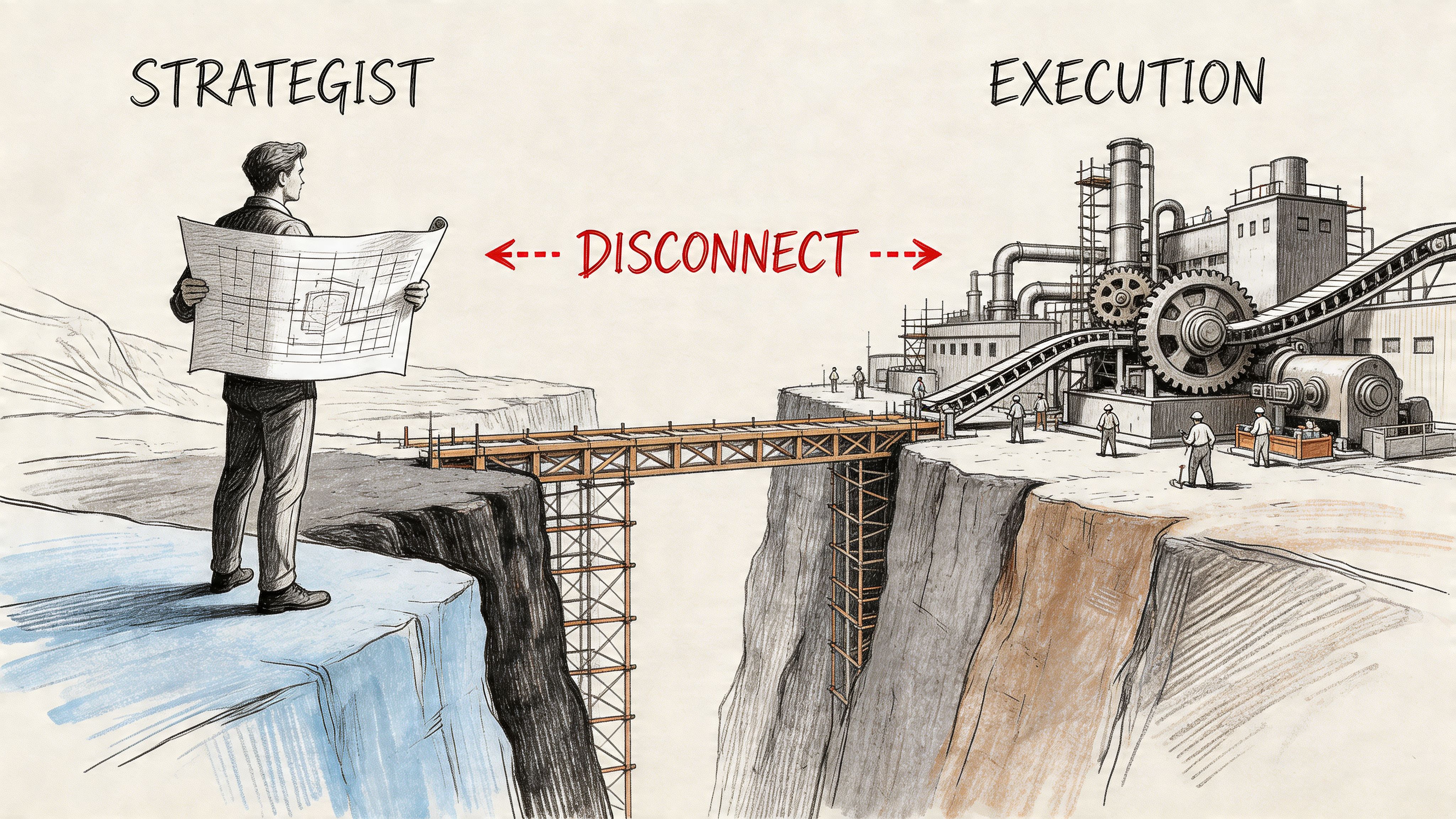
Most engagements fall into one of these structures whether people name them or not.
The partner diagnoses, prioritizes, and guides. Your internal team executes.
This model works if you already have competent people who can write, build pages, run paid tests, manage CRM workflows, and coordinate with sales. It fails when “team” really means one junior marketer and a founder with no time.
This is usually the best fit for lean SaaS teams.
The partner sets direction and also takes direct ownership of a narrow but important workstream. That could be positioning, website messaging, a demand gen pilot, sales enablement, or lead routing cleanup. Meanwhile, they coach internal people so the company doesn’t become permanently dependent.
The partner runs the system and manages specialists.
That means they may coordinate freelancers, content writers, paid media operators, designers, Webflow developers, CRM admins, or an external agency. The founder gets one accountable owner instead of managing six disconnected vendors.
You can usually diagnose the mistake before the contract is signed.
A lot of founders say they need “someone strategic but hands-on.” That’s imprecise. Be specific. Do you need someone to make decisions, someone to build, or someone to manage builders?
If the provider can’t draw a clean line between strategy ownership, execution ownership, and reporting ownership, expect drift within weeks.
That’s why partner selection should focus on operating design, not personality fit.
When evaluating a partner, ask this:
“Who is responsible for getting the first meaningful result live, and what exactly will they own?”
If the answer sounds fuzzy, the engagement will be fuzzy.
If you need a model that blends strategic guidance with concrete implementation planning, that’s the category where consulting services for startups can be useful to review. The point isn’t the label. The point is whether the work gets done.
Abstract definitions are useless once payroll and runway enter the conversation. Founders need to see what cmo as a service looks like in practice.
Take a B2B SaaS company at $2M ARR. The product is solid. Founder-led sales got the company this far. Pipeline is uneven, messaging is broad, and the team can’t tell whether low volume comes from weak demand, weak positioning, or poor conversion.
That company doesn’t need twelve parallel initiatives. It needs a sequence.
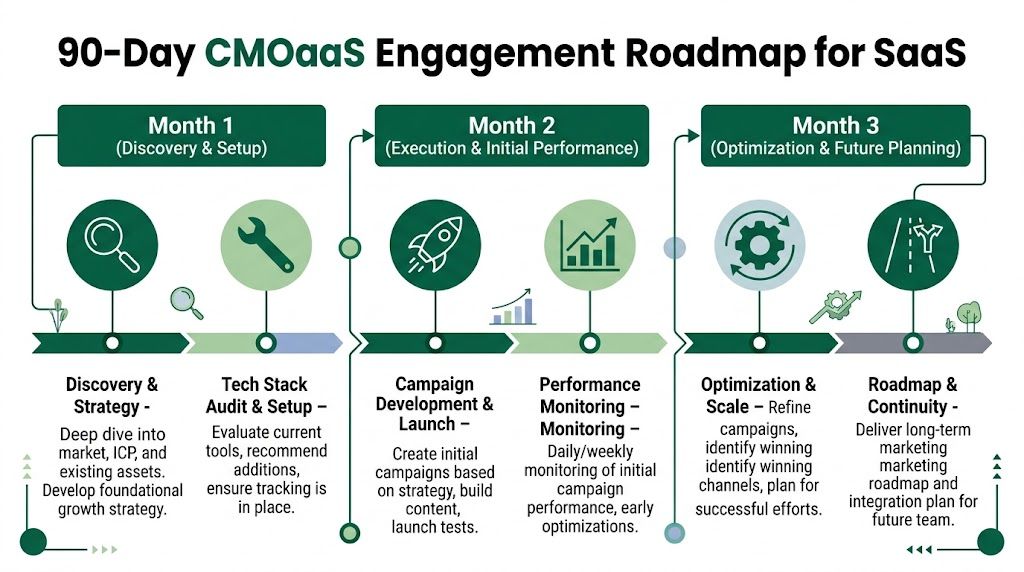
The first month should produce understanding, not busywork.
That means interviews with founders, sales, customers, and lost prospects if available. It means reviewing website copy, sales decks, CRM stages, demo flow, lifecycle emails, and paid acquisition history. It also means pressure-testing whether the company’s stated ICP matches who buys.
Typical outputs in this phase include:
For many teams, this is also when they realize their “marketing problem” is partly a sales handoff problem or a category understanding problem.
The second month should narrow the field.
The partner turns diagnosis into a working plan. Not a giant annual strategy deck. A practical roadmap with a few bets that fit the company’s sales motion, team capacity, and buying cycle.
A sensible month two usually includes:
For one company, that pilot might be a focused LinkedIn campaign with a message-market-fit landing page. For another, it might be outbound narrative testing, webinar-driven pipeline generation, partner co-marketing, or website conversion overhaul.
If you need a useful planning reference, this kind of SaaS marketing plan template can help founders think in stages rather than random channel lists.
The third month should create operating momentum.
By this point, something should be live, measurable, and reviewed against pipeline logic rather than vanity data. The team should know what message is resonating, where friction is showing up, and what deserves another round of investment.
A strong month three ends with:
Good cmo as a service work doesn’t end with “strategy complete.” It leaves behind a better system for making growth decisions.
That’s the point of the first ninety days. Not perfection. Signal.
If a cmo as a service engagement can’t be measured against revenue logic, don’t sign it.
Founders get trapped here because marketing reports are often full of movement but empty of meaning. Traffic is up. Click-through rates look decent. Engagement improved. None of that tells a CEO or board whether the company is building predictable demand.
The standard is simpler. Can you connect marketing activity to pipeline quality, sales progress, and closed revenue?
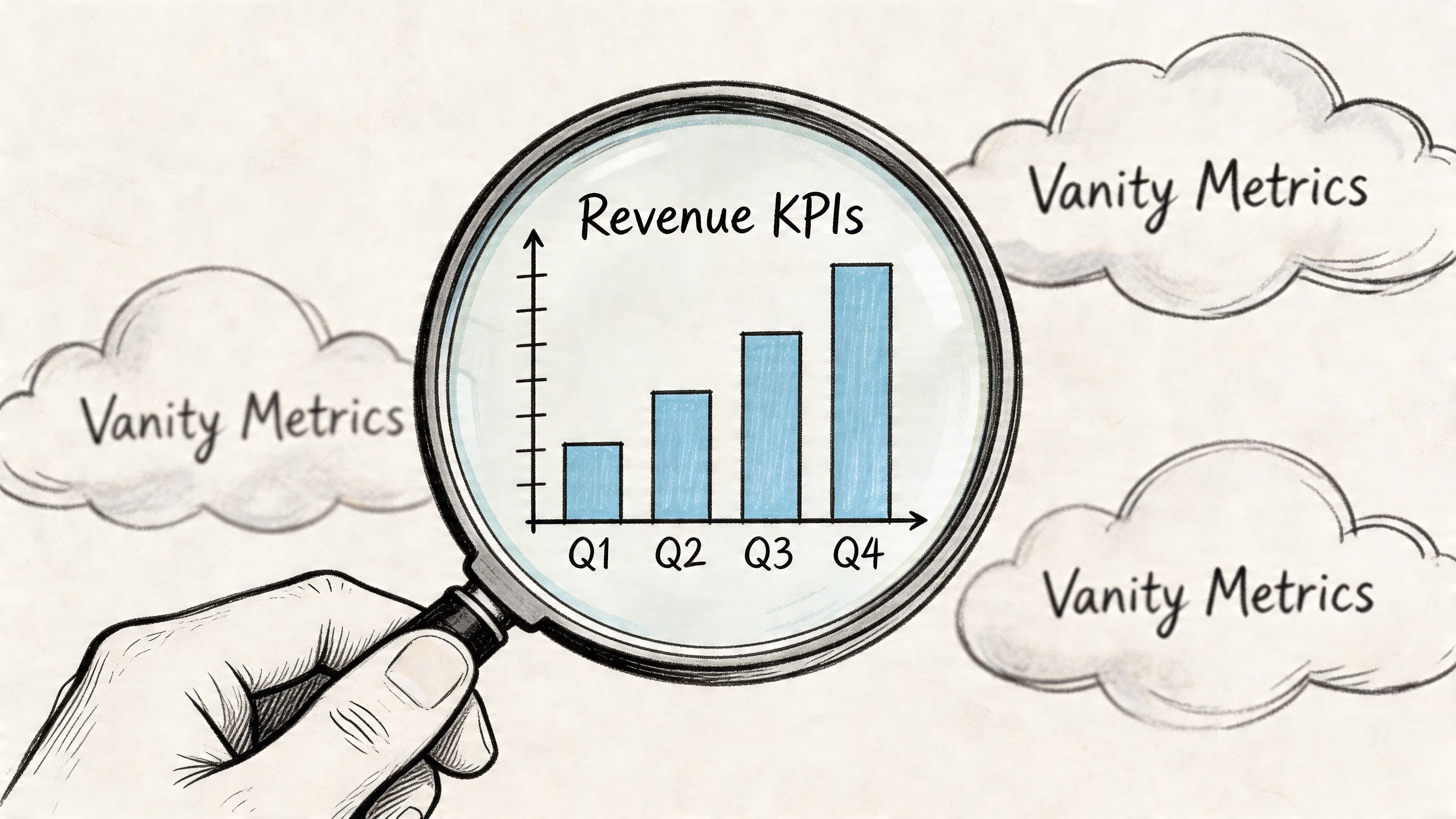
A useful marketing leader changes the scorecard.
That usually means shifting attention away from surface metrics and toward a tighter set of commercial indicators:
If your team needs a practical reference point, these essential B2B marketing KPIs that directly link to revenue are a better starting point than generic traffic dashboards.
Most companies don’t have a dashboard problem. They have a systems problem.
A key differentiator of strong CMO leadership is building multi-touch attribution and the underlying measurement infrastructure that connects marketing activity to pipeline targets, as described by Moving Minds. That matters because SaaS buying journeys don’t happen in one click. Buyers may touch content, paid media, outbound, webinars, referrals, product pages, and sales follow-up before anything turns into revenue.
Without that infrastructure, leadership falls back on politics. Sales claims marketing leads are weak. Marketing claims sales ignores them. Finance sees spend and asks what it produced.
You don’t need prettier dashboards. You need cleaner truth.
That means integrating CRM, marketing automation, and pipeline reporting so the company can see which activities influence real opportunities.
A serious cmo as a service partner should be able to answer:
This kind of explanation is often easier to understand when you see the mechanics laid out visually.
The point isn’t to create reporting theater. The point is to give leadership confidence about where money should go next, and what should stop immediately.
Most founders evaluate these partners the wrong way. They look at logos, polished frameworks, and broad service menus. None of that tells you whether the person can help your company make better growth decisions.
The market doesn’t make this easy. As noted by Sullivan Solutions, founders struggle because content around outsourced CMO services rarely provides clear ROI benchmarks, success metrics, or engagement expectations. That means you have to force specificity in the buying process.
Skip soft questions. Ask operational ones.
Good answers are specific. They reflect stage awareness, sales cycle awareness, and real B2B SaaS pattern recognition.
You should be skeptical if the provider does any of the following:
One useful way to frame your comparison is to review how a specialist agency for B2B marketing differs from a strategic operator. You’re not just buying output. You’re buying judgment.
A good start usually requires access to the basics quickly: CRM structure, pipeline stages, past campaign data, website analytics, sales call recordings, customer notes, and internal stakeholders.
The best onboarding sign is not speed alone. It’s whether the partner gets to the real constraints fast.
That’s what de-risks the engagement. Not the proposal deck.
CMO as a service is not interesting because it’s trendy. It’s interesting because most SaaS companies hit a stage where founder instinct stops being enough, but a full executive build-out is still premature.
That’s the gap the model can fill if it’s structured correctly.
The mistake is treating it like a title rental. A serious engagement should create sharper positioning, better internal alignment, clearer execution ownership, and reporting that ties marketing to revenue logic. If it doesn’t do those things, it’s just outsourced ambiguity.
The decision isn’t “Do we want a fractional marketer or not.”
It’s this:
Those questions matter more than packaging language.
A good cmo as a service engagement should make your company less confused, not more dependent.
The end state is not permanent external leadership. It’s a marketing function with enough clarity, process, and measurement discipline that you can hire confidently, scale rationally, and stop wasting cycles on disconnected activity.
If you want one concise recommendation, it’s this: buy the model that closes your current gap without pretending your company is more mature than it is.
That’s how you protect time, capital, and momentum.
If you're evaluating whether cmo as a service fits your stage, Big Moves Marketing works with B2B SaaS and technology teams on positioning, go-to-market strategy, messaging, and execution planning. The useful first step is simple: get clear on the gap you need to solve, then choose a partner whose model matches it.
Explore Big Moves Marketing services and resources:




%20-%20white.svg)