%20png%20copy.avif)
Most advice about hiring a business consultant for startups is backward.
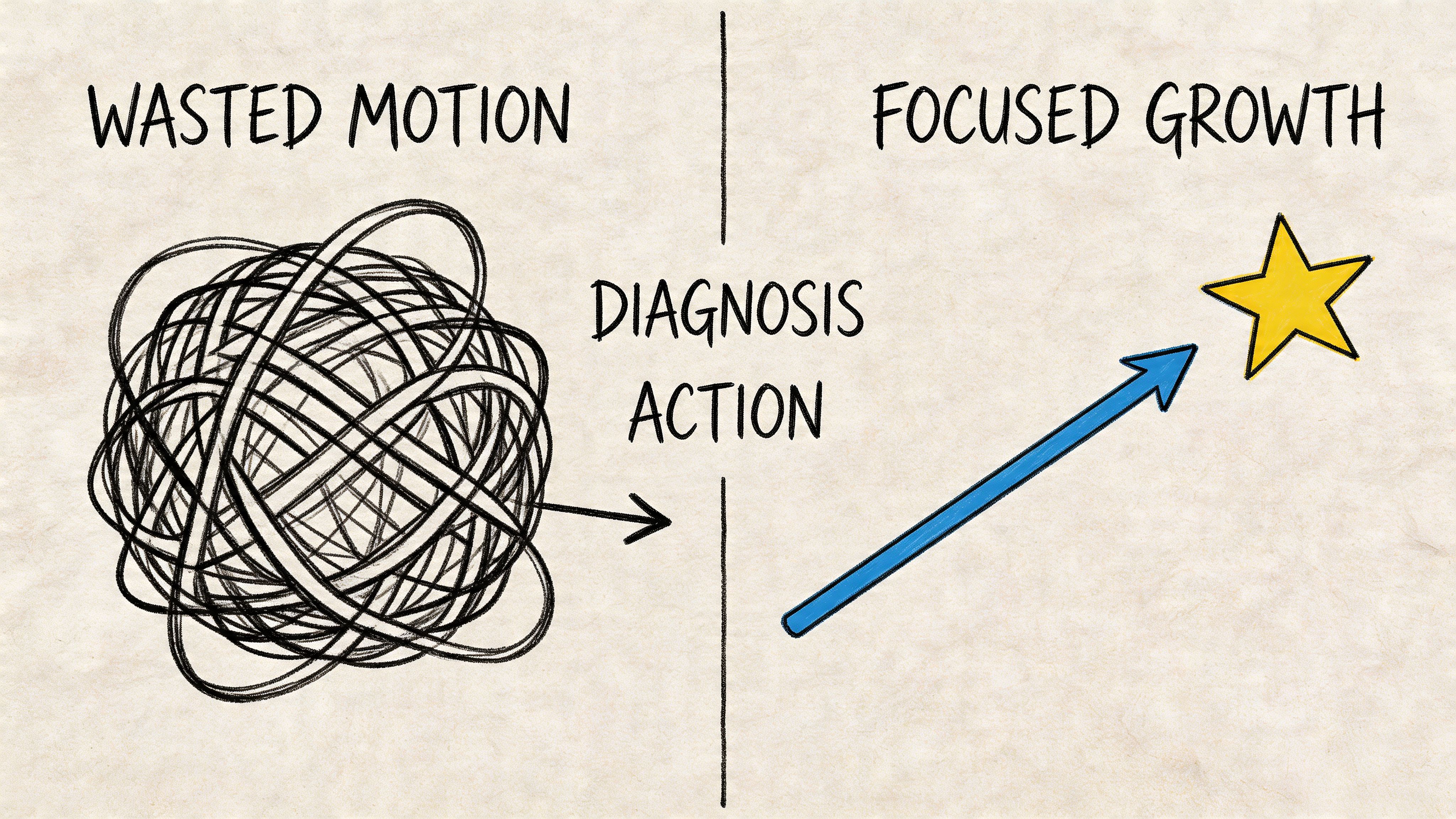
Founders are told to hire consultants when they “need expertise.” That’s too soft. A better question is whether your company is wasting motion faster than it’s learning. If the answer is yes, this isn’t an advice problem. It’s a capital allocation problem.
In B2B SaaS, wasted motion shows up in familiar ways. A founder rewrites the homepage every quarter because positioning is still fuzzy. Marketing runs five channels, but sales says lead quality is weak. Product ships faster than go-to-market can explain why any of it matters. Everyone is busy. Very little compounds.
A good consultant doesn’t exist to validate your instincts. They exist to stop drift, sharpen trade-offs, and compress the time between signal and action. That’s why the category keeps expanding. The business consulting services market is projected to grow from USD 198.29 billion in 2025 to USD 273.64 billion by 2031, driven by business complexity and pressure for data-driven decisions, according to Consulting Success. Startups feel that pressure earlier than larger companies because they don’t have slack. One bad quarter hurts more.
For B2B SaaS founders, the better model usually isn’t traditional strategy consulting. It’s focused, fractional, hands-on support that gets closer to the work and further from slideware.
The startup killer usually isn’t lack of ambition. It’s scattered execution.
Founders often hire a business consultant for startups because they want “outside perspective.” That sounds sensible, but it misses the point. Perspective is cheap. You can get opinions from investors, advisors, peers, podcasts, and LinkedIn. What you can’t get cheaply is focused execution with enforced trade-offs.
That distinction matters. A company can survive imperfect strategy for a while. It usually can’t survive months of conflicting GTM motion.
You’ve seen it.
Marketing is testing paid search, founder content, outbound, webinars, product-led onboarding changes, partner motions, and a website rewrite at the same time. Sales is improvising the pitch deck. Product is talking to one buyer persona while the homepage speaks to another. Nobody can tell what’s working because the team changed too many variables at once.
That’s growth spaghetti. It looks like effort. It behaves like waste.
Practical rule: If your team can’t explain why one GTM priority matters more than the next two, you don’t have a plan. You have activity.
The right consultant earns their keep. They reduce motion before they add motion. They narrow ICP choices, force message discipline, define what gets measured, and kill low-signal experiments early.
If your foundation is weak, clean that up first. A startup doesn’t need a hundred-page operating memo. It needs the basic logic of the business to be explicit. That’s why resources on the essential components of a business plan still matter. Not because founders need academic planning. Because weak assumptions spread into pricing, demand gen, hiring, and fundraising.
A serious consulting engagement should change the company’s operating cadence.
You should get:
If a consultant can’t materially improve those four things, they’re ornamental.
That’s also why the slow-moving strategy-firm model is often wrong for SaaS startups. You don’t need abstract market commentary three months from now. You need someone who can work inside the mess, simplify it, and create a sequence the team can follow.
If you’re evaluating that path, Big Moves has a useful take on consulting services for startups that aligns with this reality. The value isn’t in more ideas. The value is in better decisions made faster.
Founders wait too long.
They bring in outside help after a fundraise, after a missed quarter, or after the board starts asking harder questions. That is backward. The right time to engage a consultant is when execution slows down because the company no longer agrees on what to sell, to whom, and through which channel.
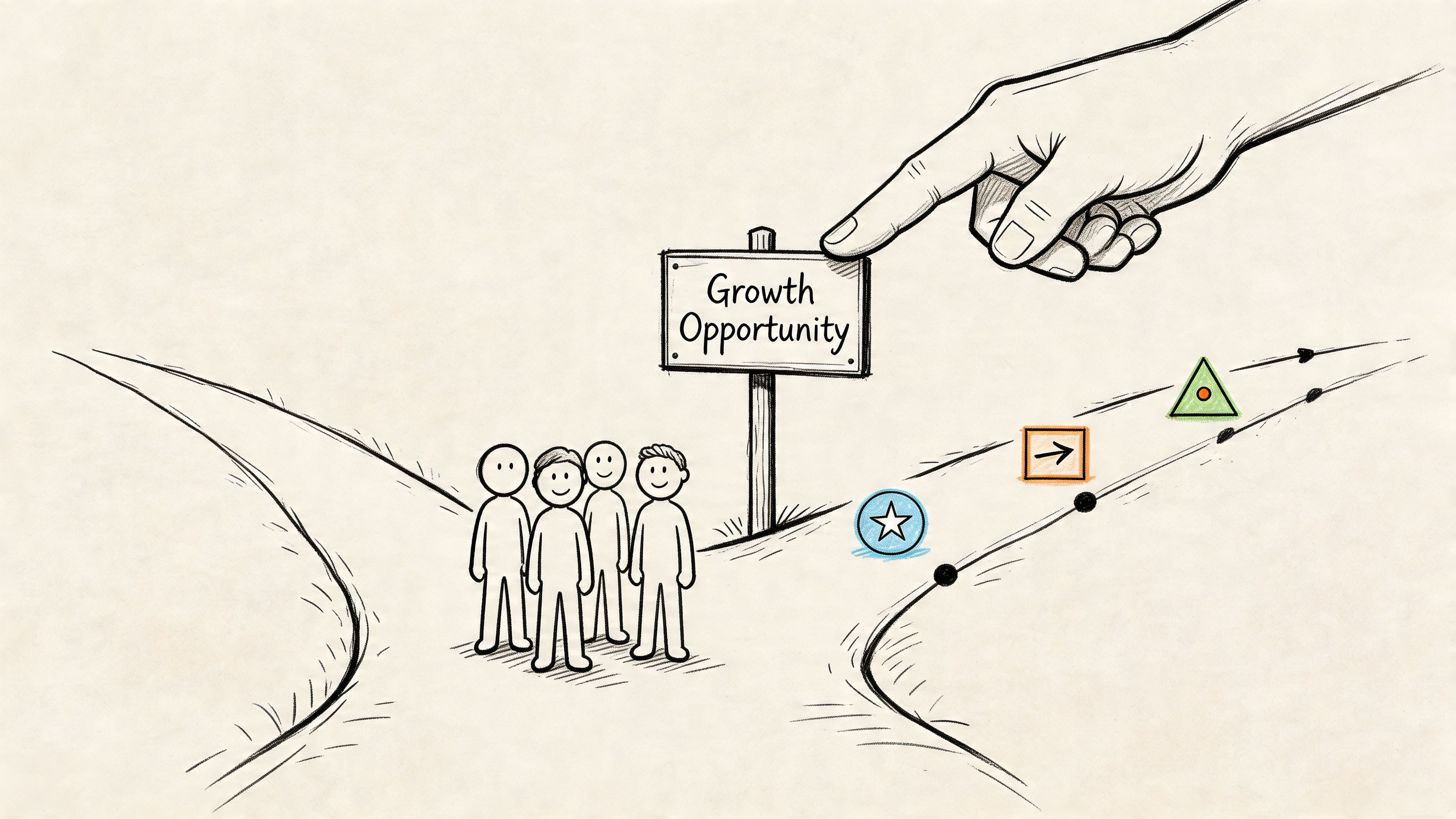
For B2B SaaS, the trigger is rarely “we need more strategy.” The trigger is usually wasted motion. Teams are working hard, but GTM output stays messy, founder-dependent, or slow to convert into revenue. That is the point where a fractional operator beats a traditional consulting firm. You do not need a long diagnosis and a slide deck six weeks later. You need someone who can enter the system fast, make the trade-offs explicit, and help the team execute a tighter plan now.
CB Insights has long documented that startups fail when they misread demand and burn cash before fixing the core problem. Those failures usually start earlier than the financials show. They start when the company keeps shipping activity into a market motion that does not hold.
This is an early warning sign, not a branding exercise.
The product may be promising. Early users may be polite. None of that matters if the company still cannot answer the commercial basics in plain English:
If those answers are soft, every downstream function degrades. Website copy gets vague. Outbound sounds interchangeable. Demo calls drift into feature narration. Paid spend spreads across too many audiences.
A good startup consultant forces the company to narrow the frame. In SaaS, that kind of fractional help is high-return because the work is immediate and operational. You get sharper positioning and a usable GTM story without taking on the cost and drag of a full strategy engagement.
This is one of the clearest signals.
The founder can close. New reps cannot. Revenue still depends on the founder joining late-stage calls, rewriting follow-ups, and rescuing objections. That is not a hiring problem. It is a transfer problem. The company has product knowledge in the founder’s head, but no repeatable sales logic the team can run without them.
Look for these symptoms:
At this stage, adding headcount usually increases noise. A fractional consultant is useful because they can quickly codify what already works, tighten the narrative, and turn founder instinct into a sales system. That is far more useful than paying a slow-moving firm to interview the team and restate the problem.
Here’s a useful discussion on timing and decision-making in startup consulting:
In this situation, startups waste a quarter.
Campaigns are shipping. Content is going out. Outbound sequences are live. LinkedIn looks active. The team can point to effort everywhere, yet revenue barely responds. That means GTM execution is disconnected from buyer behavior or the company is measuring motion instead of progress.
The common causes are straightforward:
Busy teams can still be off-course. That is why this stage calls for intervention, not encouragement.
Bring in a consultant when the company needs a forced ranking of priorities, cleaner ownership, and a shorter path from market signal to action. For SaaS founders, the best version of that help is usually fractional and execution-heavy. You want someone who will tighten the GTM system with the team, not observe it from a distance.
Most founders say they want strategy. Most of the time, they don’t.
What they need is a small set of decisions, assets, and operating rules that make the next quarter easier to run. If a consultant leaves you with vague recommendations, that’s not strategy. That’s avoidance.

A good consultant starts here because bad positioning distorts every downstream function.
Positioning is not your tagline. It’s the decision logic behind your go-to-market. It defines which buyers matter, which pains are worth naming, which alternatives you’re really competing against, and which claims you can defend.
For B2B SaaS, the deliverable should be concrete:
This becomes the company’s GTM source code. Sales decks, homepage copy, outbound messaging, demo tracks, paid creative, and analyst briefings should all inherit from it.
If your consultant can’t produce a reusable messaging framework, they haven’t solved the core problem.
A weak consultant gives you channel ideas. A strong one gives you order.
Early-stage teams lose months by launching too many motions before the basics are stable. The fix is not to “be more experimental.” The fix is to define a sequence with clear assumptions.
That usually means answering questions like:
A serious GTM roadmap is usually narrower than founders expect. It might prioritize founder-led content plus targeted outbound before paid search. It might favor customer interview-informed website changes before webinar investment. It might delay broad SEO until the category story is stable.
The point is discipline.
The first job of go-to-market is not reach. It’s message-market feedback with enough clarity to make the next bet.
One useful dimension here is instrumentation. Modern consultants often set up cleaner data foundations so founders can see what is happening. Work described by Jon Crawford shows consultants using tools like Segment, Looker, and Snowflake to build KPI visibility in real time, with 30-50% faster decision-making tied to clearer reporting and optimization of metrics like CAC and LTV in startup environments, as outlined at Startup Analytics.
That matters because many startup growth debates are really reporting failures. If marketing, sales, and product all define success differently, no amount of hustle fixes the confusion.
Big Moves’ perspective on how B2B marketing and sales consultants drive startup growth is useful here because it treats positioning, website, and demand gen as one commercial system, not separate workstreams.
Sales enablement is another phrase founders misuse.
It’s not a library of random collateral. It’s the set of tools and patterns that help reps move deals forward with less reinvention.
Good enablement usually includes a mix of:
| Asset | Why it matters |
|---|---|
| Narrative deck | Gives every seller the same commercial story |
| Discovery framework | Improves qualification and diagnosis |
| Objection handling | Prevents reps from improvising under pressure |
| Persona-specific proof | Helps buyers see relevance faster |
| Demo pathing | Connects product flow to business pain |
If your team has content but not consistency, focus is required.
A real consultant should also expose trade-offs. For example, if your product serves both PLG and sales-led motions, your sales process can’t carry both stories equally well forever. At some point, the company has to decide which motion leads the narrative and which one supports expansion.
That’s what experienced operators do. They don’t just add material. They force coherence.
The engagement model isn’t admin. It shapes the quality of thinking you get.
A lot of startups choose the wrong consultant and then blame consulting. The core issue is usually structural. They bought a model optimized for comfort, not outcomes.
Hourly arrangements sound flexible. In practice, they reward drift. Retainers sound stable. In practice, they often become vague access agreements with unclear accountability.
For an early-stage SaaS company, the question isn’t “How much consultant time do we need?” The question is “What kind of decision-making and execution pressure does this business need right now?”
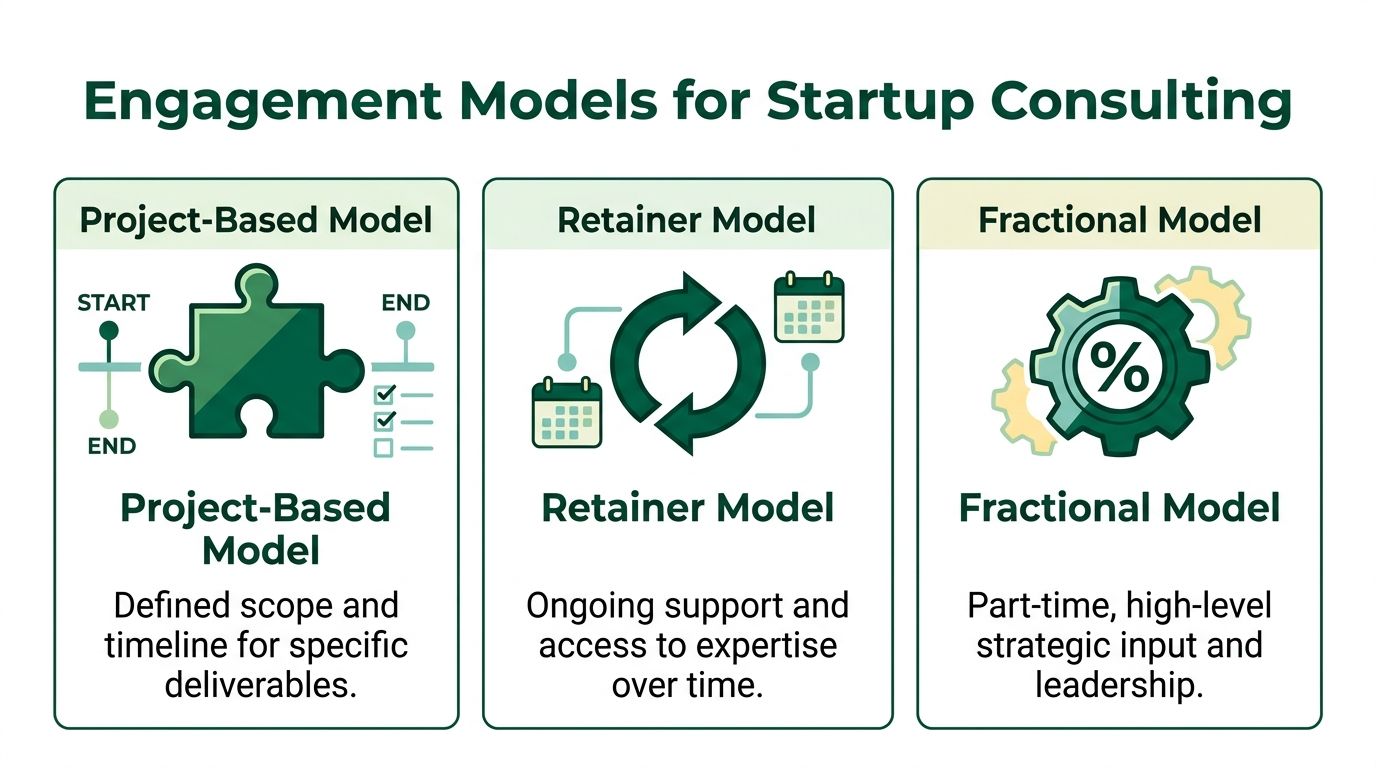
A project-based model works when the problem is clearly bounded. Messaging work. Website strategy. Sales deck overhaul. Market narrative reset.
A retainer works when you require ongoing advisory support and already have an internal team that can execute without heavy supervision.
A fractional model is usually the strongest choice when the business needs senior judgment embedded into weekly operations. That’s especially true in B2B SaaS when positioning, demand gen, and sales alignment all need to move together.
The case for fractional is getting stronger. Fractional CMO demand from SaaS startups has risen 40%, and these engagements lead to a 25% faster go-to-market compared to the timeline for hiring and onboarding a full-time leader, according to Cansulta.
That doesn’t mean every company needs a fractional CMO. It means many companies need senior commercial leadership before they need another full-time executive search.
| Model | Best For | Typical Cost | Our Take |
|---|---|---|---|
| Project-Based | A discrete problem with a clear deliverable | Varies by scope | Good when you know the problem and need a defined outcome fast |
| Retainer | Ongoing access to expertise | Varies by scope and involvement | Easy to misuse if ownership and outputs are vague |
| Fractional | B2B SaaS teams needing ongoing strategic leadership without a full-time hire | Varies by scope and operating role | Usually the strongest fit when GTM decisions need senior guidance and active involvement |
Notice what’s missing from that table. Fake precision.
Pricing depends on scope, pace, complexity, and how close the consultant gets to execution. Anyone who gives you a generic rate card without diagnosing the operating context is signaling laziness.
Operator test: Ask what decisions the consultant expects to personally influence in the first month. If the answer is fuzzy, the engagement model is probably wrong.
If you’re assessing the fractional route specifically, this overview of a fractional chief marketing officer is directionally right. The model works when you need someone to shape priorities, not just comment on them.
Founders waste a lot of money hiring “strategic” consultants who produce clean slides and leave the team with the same messy pipeline, the same vague positioning, and the same stalled decisions.
For B2B SaaS, the bar should be higher. If you are hiring a fractional consultant instead of a traditional strategy firm, you are buying speed, judgment, and execution pressure. You are not buying theater. The consultant should help the company make hard GTM calls quickly, then drive those calls into messaging, pipeline reviews, sales process, and channel focus.
If you want an outside view on the hiring process, this guide on how to find the right B2B marketing consultant is useful. Then push further and make candidates think in real time.
A real vetting process tests diagnosis under pressure. Biography matters less than commercial judgment.
Ask questions like these:
Weak consultants answer with process language. Strong ones answer with a point of view, a sequence, and the evidence they would request before making a call.
Listen for compression. The best operators narrow the problem fast because they have seen the pattern before.
They usually do four things well:
That matters because fractional consultants win by changing operating decisions quickly. Traditional consulting teams often spend too long framing the problem. A good fractional operator gets close to the revenue engine, calls the issue, and starts fixing the parts that block growth.
Here is what should lower confidence fast:
Ask one more question. “How will you know your initial diagnosis is wrong?”
Serious consultants have an answer. They can explain what signals would invalidate their hypothesis and what they would change next. That is how useful GTM work happens. Fast feedback, clear ownership, and course correction without drama.
You should also screen for dependency risk. If the consultant positions themselves as the permanent interpreter of your business, pass. The team should get sharper during the engagement. The founder should get clearer decisions. Sales and marketing should leave with better systems, better language, and better judgment.
As noted earlier, Big Moves has a concise perspective on the startup consulting model for SaaS founders and where it fits. The useful part is the bias toward focused execution over slow strategic abstraction.
Abstract advice only gets you so far. The pattern becomes clearer when you look at how these situations play out.
Problem
A B2B SaaS company had a product buyers liked in demos, but the website, outbound messaging, and sales deck all told different stories. Some prospects saw it as an analytics tool. Others thought it was workflow software. Sales calls started with long explanations because the market category was still unstable.
Diagnosis
The issue wasn’t awareness. It was message inconsistency created by internal ambiguity. The team had never forced a clear answer on primary buyer, urgent pain, and replacement alternative.
Action
The consultant ran customer interviews, reviewed sales calls, mapped competitive claims, and built a messaging framework around one dominant buyer pain. That framework then reshaped homepage copy, demo flow, outbound language, and objection handling.
Outcome
The company stopped sounding like three products stitched together. Sales had a clearer story. Marketing had cleaner message discipline. The business became easier to understand and easier to sell.
Buyers don’t reward optionality in your messaging. They reward clarity that lowers decision risk.
Problem
Another SaaS team had fallen into channel accumulation. Paid campaigns, content production, outbound sequences, partnerships, webinars, and event sponsorships were all active. Pipeline quality was erratic, and the team couldn’t tell which motions deserved more budget.
Diagnosis
This wasn’t a top-of-funnel shortage. It was a sequencing failure. Too many motions were live before the company had confidence in channel-message fit.
Action
The consultant paused low-signal activity, prioritized a smaller number of buyer-specific campaigns, tightened performance definitions across marketing and sales, and focused the team on one primary demand path before reopening secondary experiments.
Outcome
The company moved from scattered activity to a more predictable operating rhythm. Pipeline conversations improved because the team could finally separate useful signals from noise.
That kind of focused execution is what creates outsized results. As documented by Six Paths, hands-on GTM consulting for B2B SaaS has produced outcomes including over 100,000 leads generated and significant revenue growth in client work, as described on startup consulting services.
These examples are intentionally simple because the lesson is simple. The consultant didn’t save the business with genius. They removed confusion, enforced focus, and made the next set of decisions easier.
Hiring a business consultant for startups isn’t a confession that your team can’t think. It’s a decision to apply senior judgment where confusion is getting expensive.
The wrong consultant adds layers. The right one removes them.
They should leave you with a tighter narrative, a smaller set of meaningful priorities, cleaner decision rules, and a team that no longer needs constant interpretation from the founder. If the engagement creates dependency, it failed. If it builds internal capability and operating clarity, it worked.
That’s the standard.
A consultant is useful when they compress learning, reduce wasted motion, and help the company move with intent. In B2B SaaS, that usually matters more than another generic hire or another quarter of improvisation.
If your SaaS team is dealing with fuzzy positioning, stalled pipeline, or a GTM motion that feels busy but unproductive, Big Moves Marketing is one option to consider. The firm works as a fractional CMO and go-to-market partner for B2B SaaS and tech companies, helping teams clarify positioning, tighten messaging, and move from strategy into execution with a defined roadmap.
Explore Big Moves Marketing services and resources:


%20-%20white.svg)