%20png%20copy.avif)
Most founders get startup advisory wrong in the first five minutes. They hire for optics, not outcomes.
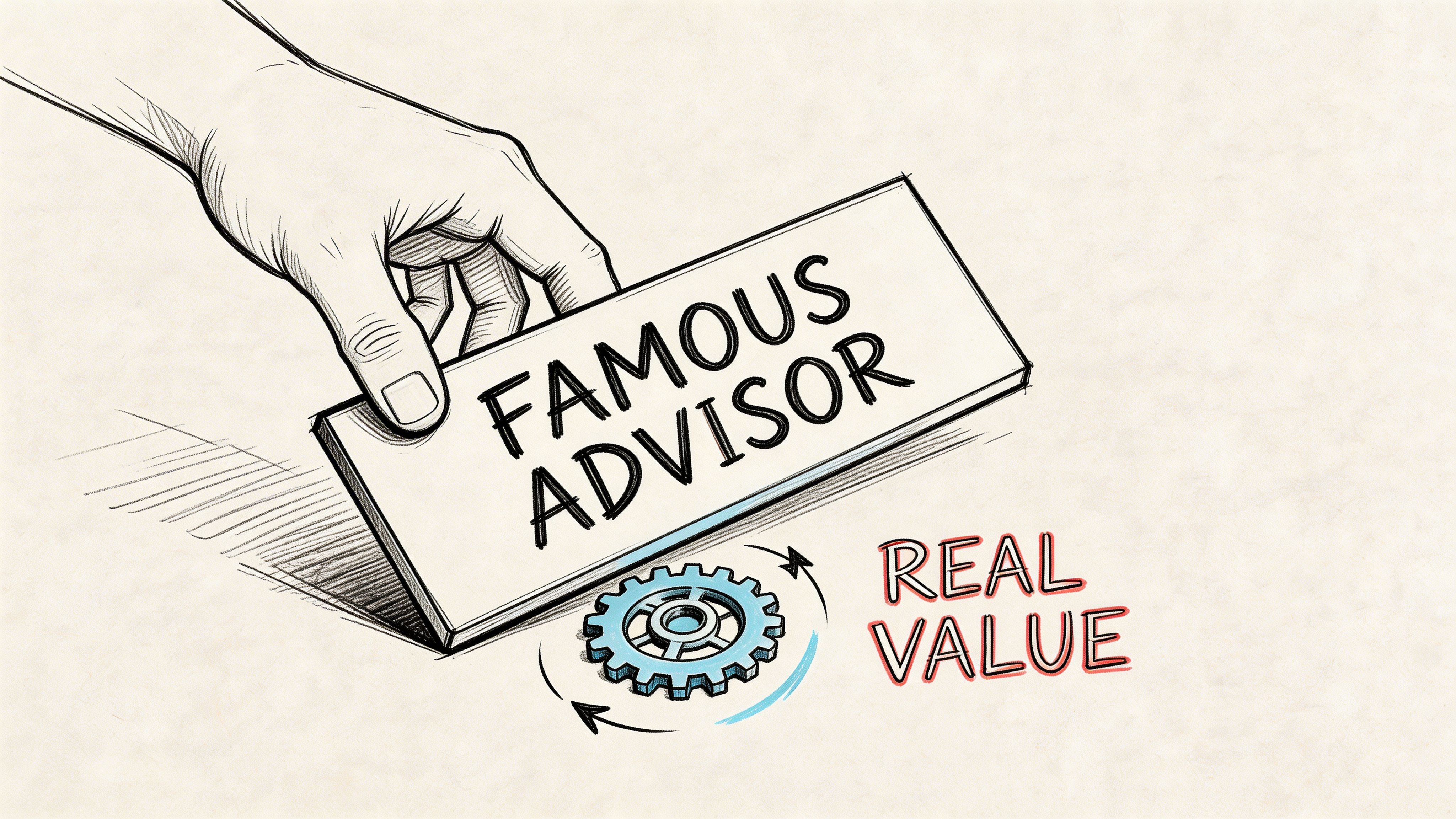
A recognizable logo on your advisory slide does almost nothing if that person never gets inside your funnel, never listens to sales calls, never pressures your assumptions, and never helps you fix the motions that are wasting time and cash. For a B2B SaaS company, startup advisory should not be social proof theater. It should be a way to compress learning, avoid dead-end GTM work, and make better decisions before the burn catches up.
Skepticism is healthy. A lot of advisors are just polished narrators of old wins. The useful ones are operators who can look at your ICP, website, sales motion, onboarding path, and pipeline mechanics, then tell you exactly where the story breaks and what to do next.
The popular advice is wrong. You do not need the most impressive advisor you can name-drop. You need the advisor who can stop you from wasting six months on a GTM motion that was broken from the start.
That matters because early failure is usually not random. The leading cause of startup failure is lack of product-market fit at 34%, followed by running out of funding at 29%. 90% of startups ultimately fail, and 70% fail in years 2 through 5, according to these startup failure statistics. An advisor who helps you validate demand, tighten positioning, and avoid cash-burning GTM experiments is not a nice-to-have. They are risk control.
A famous advisor can help with signaling. Sometimes that matters in fundraising. It does not fix confused positioning, weak sales narratives, low-converting demos, or a website that talks like a product team instead of a buyer.
Founders often confuse borrowed credibility with actual startup advisory value. Those are different things.
If your category is crowded, your sales cycle is long, and your buyers need a clear business case, then your advisor should be able to do things like:
Startup advisory earns its keep when it changes decisions, not when it decorates a pitch deck.
Buy pattern recognition plus execution pressure. That means an advisor who has seen the same GTM failure modes before and can call them early.
If you're still thinking in terms of “who looks good on the slide,” you're buying status. If you're thinking in terms of “who can help us make fewer bad decisions,” you're gaining a strategic edge. That is the right frame.
If you want a useful contrast between generic marketing support and real strategic guidance, this perspective on a B2B marketing agency is worth reading. The key difference is simple. Advice without embedded business context usually turns into slideware. Startup advisory should reduce wasted motion.
Most founders say they need an advisor when what they need is role clarity.
They hire someone “strategic” but the core challenge lies in messaging. They hire a demand gen specialist when the core challenge lies in product narrative. They hire a technical advisor, but the commercial team struggles to explain the product in business terms.
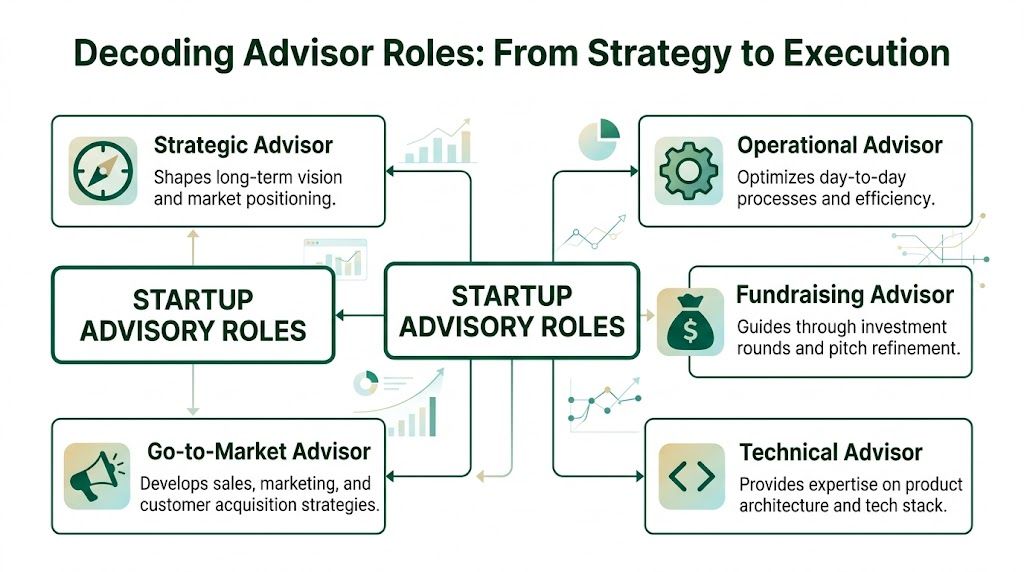
The job of startup advisory changes with the problem.
A strategic advisor is useful when the company needs sharper choices. Market focus. Category framing. Founder decision support. Trade-off management. This person should help the leadership team decide where not to play.
A fractional CMO is different. That role is for companies that need GTM leadership, operating rhythm, channel prioritization, team direction, and a coherent commercial narrative across website, content, pipeline, and sales enablement. If you're weighing that path, this breakdown of a fractional chief marketing officer is a good starting point.
A product marketing advisor matters when buyers don’t get the product fast enough. Common signs include demos that feel feature-heavy, outbound that sounds generic, and a sales team rewriting the story on every call. This person should tighten positioning, proof points, messaging hierarchy, launch narratives, and battlecards.
An operational advisor can help when execution is chaotic. Handoffs are weak. CRM stages are vague. Marketing and sales disagree on lead quality. Customer insights are trapped in Slack threads and founder memory.
A fundraising advisor is useful when the company has a finance and narrative problem, not just a deck problem. They should help connect strategy, traction story, and investor expectations.
Then there is the technical advisor, which founders often misuse.
According to DevSquad’s explanation of technical advisors, technical advisors focus exclusively on technology. They are essential for hiring key engineers, passing technical due diligence in fundraising, and bridging tech and non-tech communication gaps that derail an estimated 40% to 60% of early ventures. That matters because many founders bring in a technical advisor hoping to solve a commercial clarity problem. That is the wrong tool.
Use this instead of titles.
| Problem you actually have | Advisor you probably need | What good looks like |
|---|---|---|
| Buyers don't understand why you matter | Product marketing or GTM advisor | Clear positioning, message hierarchy, sharper sales story |
| Pipeline exists but quality is weak | Fractional CMO or GTM advisor | Better ICP filters, channel focus, cleaner qualification |
| Team keeps debating direction | Strategic advisor | Faster decisions, clearer priorities, fewer random experiments |
| Fundraising is blocked by product or architecture concerns | Technical advisor | Credible technical story, stronger diligence readiness |
| Revenue teams are busy but disjointed | Operational advisor | Better cadence, handoffs, accountability, process clarity |
A strategist tells you where to focus. An operator helps make that focus real.
That difference gets expensive when founders ignore it. If your company already knows the target segment but can’t turn that into pipeline, you don’t need another abstract market lecture. You need someone who can translate the decision into messaging, site changes, outbound narratives, and channel discipline.
Practical rule: Hire for the bottleneck, not for the résumé.
Good startup advisory starts with diagnosis. Bad startup advisory starts with a title.
If an advisor cannot define success in operational terms, don’t hire them.
“Better marketing” is not a result. “More strategic clarity” is not a result either unless you can point to the decisions it changed. Startup advisory becomes fuzzy when founders accept vague promises and vague reporting.
Start with one sentence.
What is broken right now that has commercial consequences?
Not ten things. One thing. The root issue.
For a B2B SaaS company, that usually sounds like one of these:
Then tie the advisor’s work to deliverables that can be inspected. For example:
Revenue is the lagging proof. It is too slow to manage the engagement alone.
Use leading indicators that show whether the startup advisory work is changing the system underneath revenue. If you need a useful framing for this, the discipline behind measuring marketing ROI is directly relevant.
A sensible KPI set often includes a mix like this:
| KPI type | What it tells you |
|---|---|
| Message comprehension | Do buyers understand the product faster |
| Sales call quality | Are reps telling a sharper, more consistent story |
| Qualified pipeline creation | Are the right opportunities increasing |
| Channel signal quality | Are pilots attracting the ICP you said you wanted |
| Sales cycle friction | Are fewer deals stalling for preventable reasons |
The mistake is chasing volume before clarity. A bigger top of funnel doesn't help if the wrong buyers keep showing up or if the sales team still can’t explain the product cleanly.
Define advisor success around changed behavior, better decisions, and measurable commercial movement. Otherwise you are paying for intelligent conversation.
A serious advisor should be comfortable with deadlines, ownership, and a scoreboard. If they resist that, they want authority without accountability.
Founders love to say they want aligned advisors. Then they hand out equity casually, set no milestones, and wonder why the relationship drifts.
Compensation shapes behavior. Treat pricing as strategy, not admin.
Equity feels cheap because it does not hit the bank account this month. That does not make it cheap.
The FAST Agreement gives founders a structured benchmark. A Strategic advisor at an early Startup stage might receive 0.50% equity, while the same role at a Growth stage company might receive 0.30% equity, according to this advisory compensation benchmark. The same source notes that milestone-based structures help prevent 20% to 30% excess dilution in mismanaged pre-seed rounds.
That should tell you two things.
First, stage matters. The earlier the company, the more uncertainty the advisor is absorbing. Second, structure matters. Equity without scope, vesting, milestones, and exit terms is sloppy.
If you are giving anyone equity, treat the paperwork seriously. Founders often think only about brand, finance, and fundraising advisors, then ignore legal design until later. That is backward. Even a short engagement benefits from clear terms, and this primer on fractional general counsel services is useful if you need support structuring advisory agreements, confidentiality, and governance boundaries.
Here is the clean comparison most founders need.
| Model | Structure | Best For... | Key Trade-Off |
|---|---|---|---|
| Equity-only | Advisor receives shares, often with vesting and milestones | Very early companies with limited cash and high uncertainty | Strong alignment potential, but easy to over-grant and under-manage |
| Monthly retainer | Fixed monthly fee for ongoing access and defined involvement | Companies needing consistent strategic input and operating rhythm | Better focus and accountability, but founders expect too much if scope is vague |
| Project-based | Fixed fee tied to a specific outcome or workstream | Messaging projects, launch support, ICP refinement, audit work | Clear deliverables, but limited continuity after the project ends |
| Hybrid | Smaller cash fee plus equity or milestone component | Companies wanting commitment without overusing either cash or cap table | Good balance, but only if milestones and decision rights are explicit |
An equity-only advisor who shows up once a quarter is dead weight. A retainer-based advisor with no defined remit becomes an expensive spectator. A project-based advisor used for a company-wide leadership problem will feel narrow because the scope is narrow.
Use a retainer when you need ongoing decision support. Use project-based work when the business problem is discrete. Use equity when the advisor is taking real early risk and bringing repeatable value over time. Use hybrid when you need both seriousness and protection on both sides.
If you want a grounded perspective on how startup consulting models should align to stage and need, this view on consulting services for startups is useful.
The central rule is simple. Pay for the behavior you want. Then document it.
Most advisor selection is lazy. Founders scan logos, skim titles, hear a polished backstory, and call it diligence. That is how you end up with people who sound smart in a first meeting and contribute very little after month one.
You want someone who has operated close to your exact bottleneck.
If you're a PLG product trying to layer in sales-assisted expansion, don’t hire someone whose only useful story comes from enterprise outbound. If you're selling into ops leaders with a messy multi-stakeholder buying process, don't hire someone whose experience is mostly top-of-funnel brand work.
One example from this operator-mentor discussion notes founders gaining 60% of early users through targeted, helpful engagement in niche forums.
That doesn’t mean you should copy the tactic blindly. It means direct category familiarity matters more than broad business wisdom.
Useful sourcing paths include:
A similar principle applies in other expert-led buying decisions. This guide on choosing the best tax advisors gets one thing right. Credentials matter less than fit, relevance, and the ability to solve your specific problem.
Do not rely on chemistry alone. Test thinking in real time.
Give the candidate a narrow, real problem before the second meeting. For example:
Then ask them to walk you through how they’d diagnose it.
Look for this:
Look for what they avoid too. If they jump into tactics before clarifying the buyer, motion, deal shape, and current funnel behavior, they are guessing.
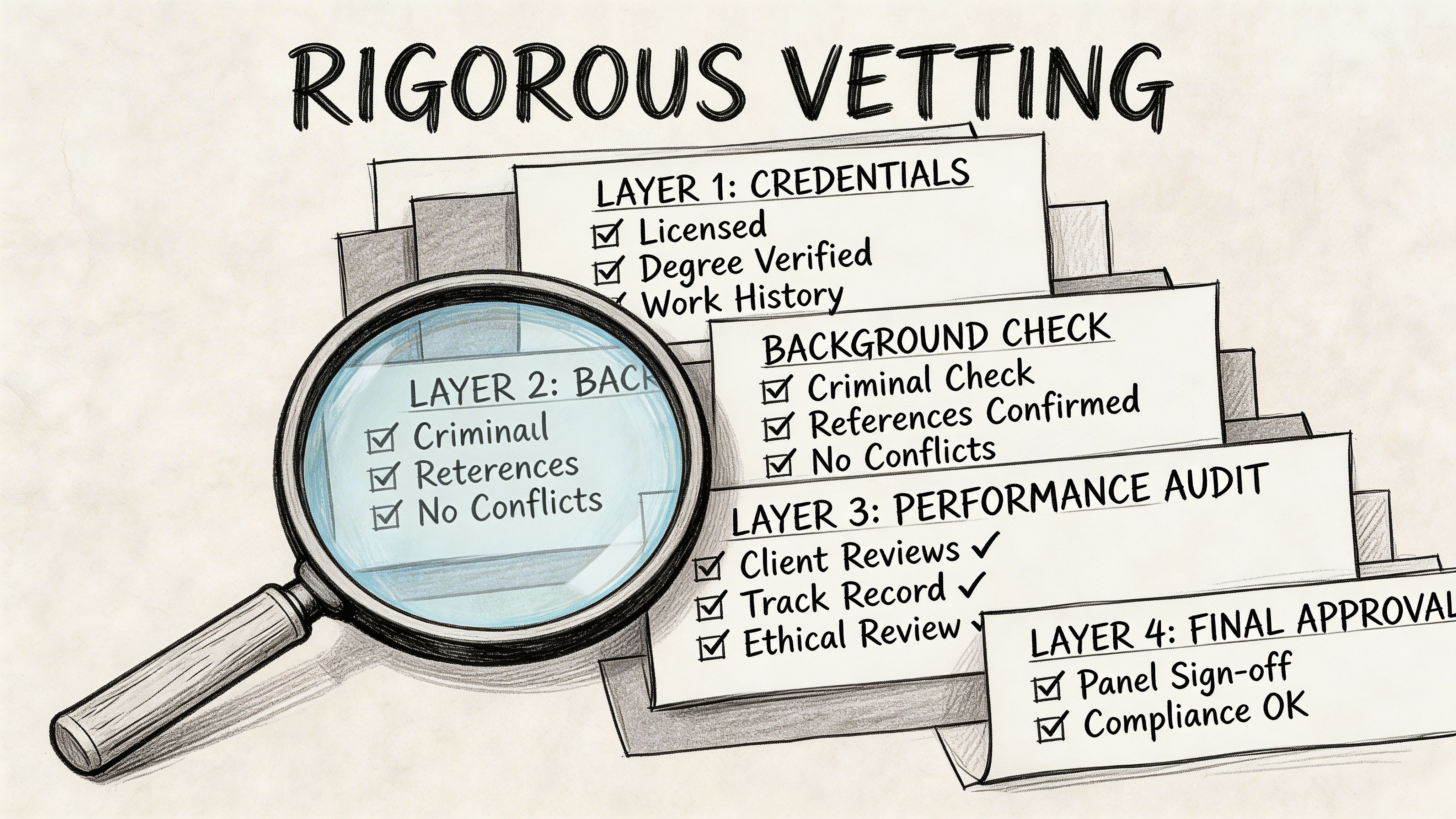
Here is a useful example of how to think about vetting with more rigor:
Reference checks are usually weak because founders ask social questions.
Do not ask, “Were they great to work with?”
Ask this instead:
The best advisors are often a little inconvenient. They challenge your story before the market does.
If you want another lens on choosing a serious operator rather than a decorative consultant, this piece on a business consultant for startups is worth your time.
Good startup advisory should survive scrutiny. If it only survives vague praise, walk away.
A good advisor can still fail if the onboarding is sloppy. Most founders create that problem themselves.
They hire someone for judgment, then starve them of context. No customer calls. No product walkthrough. No access to funnel data. No view into how sales sounds in the field. Then they complain the advice feels generic.
Give context fast. Not eventually.
A useful onboarding pack should include:
Do not sanitize it. Advisors need the mess, not the polished version.
A short internal memo helps too. It should answer four questions:
Set the cadence immediately.
Not a vague “we’ll stay in touch.” A real operating rhythm.
That usually means:
The founder mistake is treating startup advisory like ambient access. It works better as a compact decision system.
Onboarding should also define what the advisor is not responsible for. If you blur the line between advisor, contractor, exec, and therapist, the engagement will drift and expectations will break.
Startup advisory usually fails in boring ways. The problems are predictable.
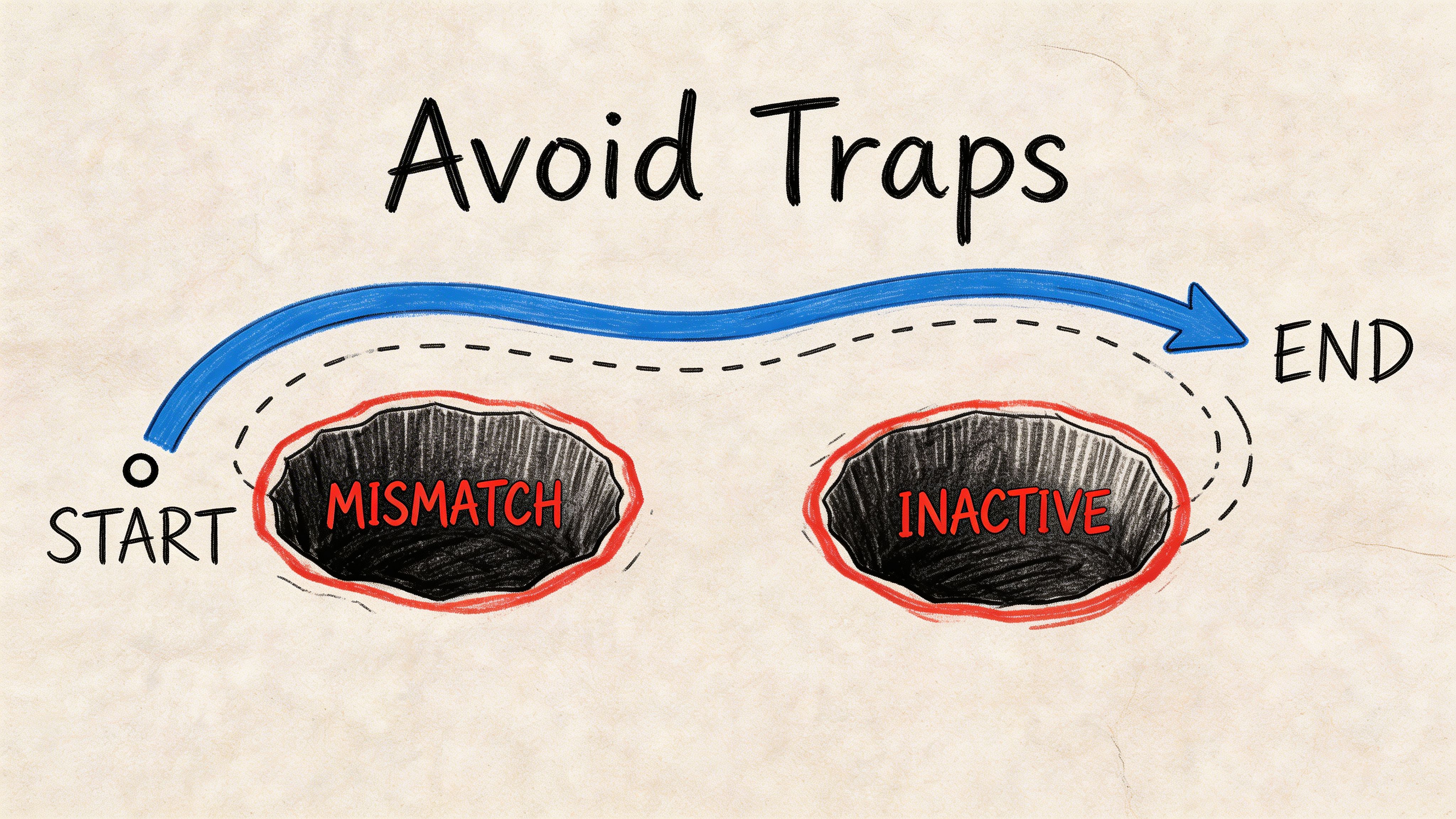
The first trap is role confusion. The founder expects execution. The advisor thinks they were hired for guidance. Solve that before the first meeting by defining scope in plain language.
The second is advice without adoption. Founders ask for candor, then ignore the hard feedback because it threatens the original plan. If you only want validation, don’t hire an advisor.
The third is inactive access. You brought in someone smart, but you only speak when something is on fire. Good advisory depends on cadence. Infrequent interaction creates shallow context and late intervention.
The fourth is scope sprawl. The engagement starts with positioning, then drifts into hiring, pricing, investor prep, org design, and partner strategy. That sounds productive. It usually means nothing gets fully solved.
Use this quick pre-mortem:
A weak advisor says what sounds reasonable. A strong one says what your team has been avoiding.
Treat the relationship like a decision asset. Not a title. Not a favor. Not a background badge.
The right startup advisory relationship gives you three things. Better judgment, faster learning, and less wasted motion.
That is why the “consultants are useless” argument misses the point. Useless advisors are useless. Real operators are different. They compress trial and error. They expose weak assumptions earlier. They help founders stop confusing activity with progress.
A serious advisor does not replace the founder. They make the founder harder to fool.
That is the mental model worth keeping. Startup advisory is not about borrowing prestige. It is about buying clarity where confusion is expensive, and buying speed where indecision compounds.
If you hire one, hire someone who can help your team think better and execute with more precision. Anything less is overhead.
If you're a B2B SaaS founder or growth leader who needs sharper positioning, a clearer GTM path, and execution-level advisory instead of recycled theory, Big Moves Marketing is built for that. The work is direct, commercially grounded, and focused on helping teams make better decisions faster.
Explore Big Moves Marketing services and resources:



%20-%20white.svg)