January 10, 2026

A solid B2B SaaS marketing plan is more than a document; it's the blueprint for predictable growth. It's what turns a great product into a market-defining solution by choreographing how you find, engage, and ultimately win the right customers in a crowded field. This is your North Star, guiding every decision from content creation to sales enablement.
Before you spend a single dollar on ads or write one line of copy, the most successful marketing plans start with a moment of profound clarity. This is the foundational work—the unglamorous but absolutely essential process of defining who you serve, what you uniquely offer, and where you fit.
Skipping this step is like building a skyscraper on sand. It’s a surefire recipe for wasted effort and missed opportunities.
The SaaS market has absolutely exploded. Global revenue is projected to soar to between $300–$390 billion by 2025. This incredible growth means your ideal buyers are completely overwhelmed. The average organization already uses 106 SaaS apps, forcing every new solution to fight for a sliver of attention.
This is exactly why a rock-solid strategic foundation isn't optional anymore. It's the only way to stand out when 81% of organizations have already automated key processes with SaaS tools.
The first pillar of your plan is nailing your Ideal Customer Profile (ICP). This goes way beyond generic personas with stock photos. A truly powerful ICP is a detailed portrait of the company—and the key people within it—that will get the most value from your solution. In turn, they'll provide the most value back to your business.
To build an ICP that actually works, you need to get specific:
For a deeper dive, our guide on creating an ideal customer profile offers a structured template to make sure you cover all the critical angles.
This whole process is about creating a logical flow: you identify your ideal customer, define your unique value for them, and then establish your market position.

Each step builds directly on the last, creating a cohesive strategy that aligns every single marketing effort with what your best customers truly need.
Once your ICP is crystal clear, you can craft a Unique Value Proposition (UVP) that speaks directly to their world. Your UVP is a concise statement that answers the buyer’s single most important question: "Why should I choose you over all the other options, including just doing nothing?"
A strong UVP isn't just a tagline. It’s a promise of the tangible, measurable outcome a customer will achieve by using your product. It has to be specific, pain-focused, and draw a clear line between you and the other options.
For example, instead of saying, "We offer an easy-to-use project management tool," a much more compelling UVP would be, "We help B2B marketing teams deliver projects 25% faster by automating status updates and eliminating unnecessary meetings." See the difference? One is a feature, the other is an outcome.
To get this right, it’s helpful to translate your product’s technical features into benefits that your ICP actually cares about. This is a critical exercise for your entire team.
This simple table forces you to think from the customer's perspective, which is the key to creating messaging that truly connects and converts.
Finally, your positioning statement brings it all together. This is an internal document that becomes the source of truth for all your marketing and sales messaging. It clearly defines your target market, frames the problem you solve, describes your solution, and hammers home what makes you the best possible choice.
As you build out your B2B SaaS marketing plan, having a structured approach can make a world of difference. You can find some great starting points with these essential marketing strategies templates to guide your efforts.
This foundational work ensures every piece of content, every ad, and every sales call reinforces the exact same powerful, consistent message.
Once your strategic foundation is solid, it's time to build the machine that actually brings qualified leads through the door. This isn't about casting a wide net and hoping for the best; it's about engineering a predictable, scalable demand generation engine specifically for your B2B SaaS product.
This is the part that turns your brilliant strategy into a tangible pipeline. The right channels, all working together, create a powerful system that attracts, engages, and ultimately converts your Ideal Customer Profile. Let's move past the theory and start building.

You can't be everywhere at once, especially in the early days. The secret is to pick two or three core channels where you know you can win, completely dominate them, and then expand. Your B2B SaaS marketing plan has to be ruthless about focus.
Which channels you pick will depend heavily on your business model. An enterprise solution with a massive LTV is going to need a very different game plan than a freemium product trying to attract a wider user base.
The goal here is simple: make sure your marketing motion and your sales motion are perfectly aligned from day one.
Content marketing isn’t just about churning out blog posts. It’s about becoming the single most trusted, go-to resource in your niche. For B2B SaaS, this means creating genuinely valuable content that solves real problems for your ICP—long before they’re even thinking about buying software.
The data backs this up. Content marketing generates roughly 3x more marketing‑qualified leads (MQLs) than outbound calls for SaaS companies. At the same time, a well-oiled SEO strategy often drives between 30–60% of the total SaaS pipeline. These aren't vanity metrics; they prove that content and SEO need to be treated as primary demand drivers.
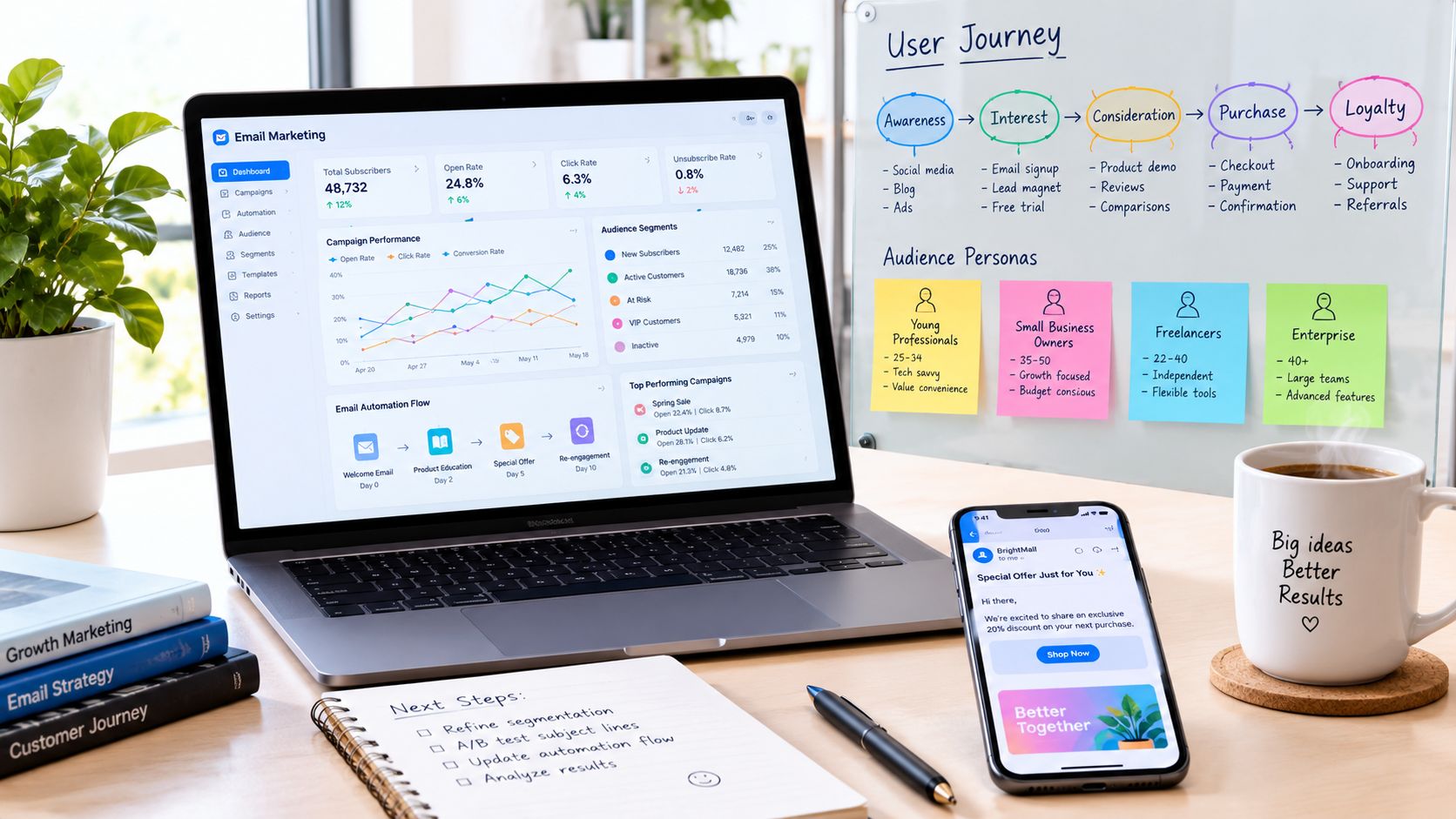
Think about mapping your content directly to the buyer's journey:
Think of SEO as the high-speed distribution system for all your brilliant content. It’s what makes sure your solutions pop up at the exact moment your ideal customer is looking.
The most effective B2B SaaS content doesn't just attract visitors—it builds trust. Every piece of content is an opportunity to demonstrate your expertise and prove you understand your customer's world better than anyone else.
This isn't a short-term play. It's about building a long-term, defensible asset that keeps generating leads for years.
While your organic channels are busy building long-term value, paid acquisition delivers immediate feedback and predictable traffic. The key to winning here in a B2B SaaS marketing plan is surgical precision, not a firehose of cash.
Forget broad campaigns. Focus every ad dollar where buyer intent is highest:
Paid ads aren't just for leads; they're for data. Use these campaigns to test your messaging, see which value propositions actually resonate, and gather intel you can feed back into all your other marketing channels.
Account-Based Marketing (ABM) completely flips the traditional marketing funnel on its head. Instead of marketing to a huge audience to generate a ton of leads, you handpick a shortlist of high-value target accounts and treat each one like its own market.
This is the perfect strategy for B2B SaaS companies selling big-ticket contracts to a finite number of potential clients.
A simple ABM play might look something like this:
ABM demands tight alignment between marketing and sales, but the payoff is huge: shorter sales cycles and significantly bigger deals. For a more detailed look at structuring these campaigns, you can learn more about building a modern demand gen strategy. This integrated approach makes sure every marketing dollar is spent reaching the customers who matter most.
Let's be honest: in B2B SaaS, your product is your single most powerful marketing asset. Today's buyers don't want to sit through a demo to find out if your software works; they want to get their hands on it and see the value for themselves. A marketing plan that gates the product behind a sales team is fighting an uphill battle. This is where Product-Led Growth (PLG) comes in, turning your software from a fortress into your #1 acquisition engine.
PLG isn't just about slapping a "free trial" button on your homepage. It’s a strategic shift that needs to be woven into the fabric of your marketing plan. It’s about letting the product do the heavy lifting—demonstrating its value so clearly that upgrading feels like the most natural next step for a user. This philosophy aligns your entire business with how modern buyers actually want to buy software.

The path from your homepage to a user’s first "aha!" moment—that instant they get what your product does for them—has to be ridiculously smooth. Every bit of friction during sign-up or onboarding is a leak in your funnel, causing people to drop off before they ever experience what makes your product special.
Your job is to be a guide, leading them straight to value, not just dumping them in a complex dashboard and hoping for the best.
This seamless handover from marketing to product is non-negotiable. For a deeper dive, check out our complete guide on customer onboarding best practices.
In the old sales-led world, everyone obsessed over Marketing Qualified Leads (MQLs). In a product-led model, the real gold is the Product-Qualified Lead (PQL). A PQL isn't just someone who downloaded an ebook; they're a user who has activated key features, proving through their actions that they're getting real value from your product.
These aren't just sign-ups; they are your future power users and champions. Finding them means shifting your focus.
A PQL is the warmest lead you will ever get. They haven’t just read your marketing materials; they’ve experienced your product's value firsthand. Your job is to make their path to a paid plan effortless.
Once you’ve identified a PQL, your nurturing can become incredibly contextual. Forget generic email blasts. Instead, you can trigger messages based on what they're doing in the product. For instance, if a user is about to hit their project limit, a timely automated email or in-app nudge can prompt them to check out a paid plan.
For a PLG motion to work, your marketing and product experience have to be perfectly in sync. The promises you make on your website, in your ads, and across your content must be delivered seamlessly inside the product. This creates a cohesive, trustworthy journey from start to finish.
The shift toward self-serve isn't a fad; it's a fundamental change in buyer behavior. By 2025, it's estimated that a staggering 80% of B2B SaaS sales will happen online. Yet, a recent analysis found a major disconnect: 36.3% of B2B SaaS companies still generate zero revenue from self-serve channels.
That same report revealed that companies with a successful self-serve motion achieve nearly double the profitability rate of those without one.
This gap isn't a problem; it's a massive opportunity. Integrating a PLG motion is a direct response to how people want to buy software today, and it's a proven path to more efficient, profitable growth. When you make your product the heart of your acquisition strategy, you're building a growth engine that's built to last.
Marketing can drive a flood of perfect-fit leads, but a deal isn't really a deal until a signature hits the contract. That critical bridge between a warm lead and a closed-won customer is built with sales enablement.
A truly battle-tested B2B SaaS marketing plan has to get specific about how you’ll arm your sales team. They need the right tools, the right messaging, and the right proof to win every single conversation. This is where your marketing strategy stops being theoretical and starts making money.

First things first, you need to build a foundational set of assets that sales can grab for any interaction. This isn't just about making things look nice; it's about ensuring every salesperson is telling the same powerful story, consistently. This toolkit becomes the source of truth for your entire go-to-market motion.
Think of it as the standard-issue gear for your revenue team. Without it, every rep is left to fend for themselves, which leads to disjointed messaging and, frankly, lost deals.
Your non-negotiables should include:
Once the basics are locked down, the next layer of enablement is all about prepping sales for the tough questions. You know the ones: the "but what about Competitor X?" conversations. This is where you shift from proactive selling to strategic defense, making sure your team is never caught flat-footed.
When a prospect brings up a competitor, it’s not a threat—it’s a buying signal. They're serious. Now it's your job to give sales the perfect talking points to steer the conversation back to your unique strengths.
The goal of a battlecard isn't to trash-talk your rivals. It's to calmly and confidently reframe the conversation around the value propositions where you know you have an undeniable advantage.
Get these critical resources developed:
For a more structured way to pull all this together, think about organizing these assets into a central guide. You can find some great ideas for building out a complete library of materials in this detailed sales playbook template, which is fantastic for getting the whole team on the same page.
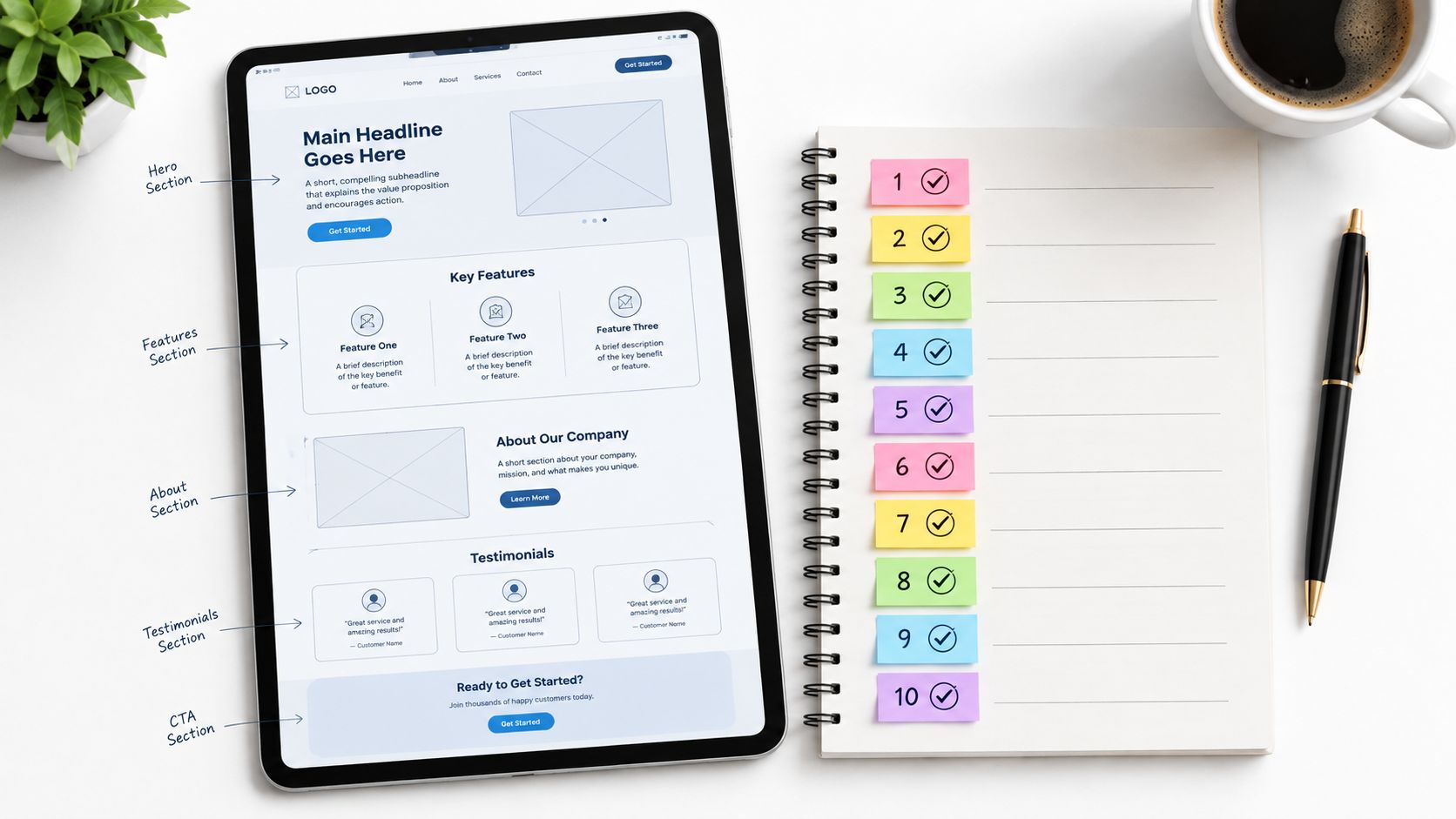
To help you prioritize, here’s a checklist of the core assets your marketing plan should deliver to properly equip your sales team.
Focus on building these six assets first, and you'll have a sales team that feels supported, confident, and ready to close.
In the world of B2B SaaS, especially when you're talking about higher-ticket deals, the final decision almost always comes down to the numbers. The CFO wants to see a clear return on investment, period. Your enablement materials have to give your sales reps the tools to build a rock-solid business case.
This is how you transform your product from a "nice-to-have" tool into a "must-have" strategic investment.
Give your team these ROI-focused assets so they can talk numbers with confidence:
By investing in these sales enablement assets, you’re not just creating documents. You’re making sure that the powerful messaging you crafted at the start of your plan is delivered consistently and effectively in every single sales call.
A plan without measurement is just a list of wishes. So, let’s talk about the final, critical piece of your B2B SaaS marketing plan: turning all that raw data into decisive action.
This is where you graduate from chasing vanity metrics—like social media likes or impressions—and start focusing on the numbers that truly signal the health and momentum of your growth engine. It’s how you build a sustainable, scalable business: not by guessing, but by knowing.
The first step here is a big mindset shift. Clicks and follower counts feel good, but they don't pay the bills. Real performance is measured in metrics that tie directly back to revenue and customer health. Your goal is to draw a straight, undeniable line from every marketing activity to a real business outcome.
To get there, you need to zero in on a handful of key performance indicators (KPIs) that tell the true story of your business. These are the numbers that should live on your marketing dashboard and drive your weekly meetings.
The core metrics that matter most for B2B SaaS are:
Think of your marketing dashboard as your cockpit. It should give you an at-a-glance view of your most important metrics, letting you spot trends, identify problems, and celebrate wins without getting lost in a sea of spreadsheets.
And you don't need a complicated, expensive tool to start. A simple Google Sheet or a basic analytics dashboard can work wonders.
Your dashboard should be organized to answer three essential questions:
The purpose of a dashboard isn’t just to report numbers; it's to provoke questions. When a metric unexpectedly dips or spikes, it should trigger an immediate investigation from your team to understand the "why" behind the data.
This approach turns your data from a rearview mirror into a forward-looking guidance system. For a more exhaustive list of KPIs to consider, you can explore this comprehensive breakdown of essential SaaS marketing metrics.
Measurement is completely useless without action. The whole point of tracking all this data is to create a tight feedback loop where insights are constantly used to improve your strategy. This is how you build a true growth machine that learns and adapts.
It all comes down to fostering a culture of experimentation and optimization across your team.
This is the heartbeat of a successful B2B SaaS marketing plan. It’s a living, breathing process of planning, executing, measuring, and optimizing. It’s this relentless cycle of improvement that separates the companies that stagnate from the ones that achieve unstoppable growth.
Building your first B2B SaaS marketing plan can feel like staring at a blank map. You know the destination—growth—but the path isn't always obvious.
Let’s tackle some of the most common questions that come up along the way. These are the ones we see founders and marketing leaders wrestle with most often, and my goal is to give you direct, actionable answers to help you move forward with confidence.
This is the big one, isn't it? While there’s no universal magic number, a common benchmark for early-stage SaaS companies is to put 40-60% of revenue toward sales and marketing. This sounds aggressive, but in the early days, that level of investment is often what it takes to capture initial market share and build real momentum.
But a far better way to think about it is to work backward from your goals. Don't just pick a percentage. Instead, figure out your customer acquisition cost (CAC) targets and your revenue goals. From there, you can calculate the actual marketing investment needed to hit those numbers across your chosen channels. It's a much more intentional approach.
Start by focusing your budget on just two or three channels you truly believe will be the most effective. Measure everything relentlessly. As you validate what works, you can scale your investment. This keeps you from spreading your resources too thin and getting mediocre results everywhere.
It’s easy to get lost in a sea of data. In B2B SaaS, you absolutely have to focus on the metrics that connect directly to revenue and the overall health of the business. Forget the vanity metrics.
Here are the non-negotiables:
Beyond these, you'll want to watch your funnel metrics closely—things like your lead-to-MQL rate and MQL-to-demo conversion rate. Together, these numbers give you a full picture, from a person's first flicker of interest all the way to long-term profitability.
For most B2B SaaS startups, building a strong inbound foundation is the most sustainable path to long-term growth. When you invest in high-quality content and a solid SEO strategy, you're not just running a campaign; you're building an asset. An asset that will generate qualified leads for years to come, often at a lower and lower cost over time.
However, that doesn't mean you should ignore outbound, especially in the very early days.
Targeted outbound or a focused account-based marketing (ABM) effort can be absolutely critical for getting your first 5-10 foundational customers. Those early conversations provide priceless market feedback that you'll use to refine your product and your messaging.
The best approach? A balanced one. Start building your foundational inbound strategy from day one, but run small-scale, highly targeted outbound campaigns in parallel. This gets you immediate conversations and feedback while your long-term, scalable growth engine is warming up.
Crafting a B2B SaaS marketing plan that actually drives results takes expertise and a deep understanding of your market. At Big Moves Marketing, I specialize in building the positioning, sales tools, and launch strategies that help SaaS and AI startups win deals and grow revenue.
If you're ready to turn your product into a market leader, let's talk about making your next move a big one.