%20png%20copy.avif)
A lead generation agency is a specialized firm that builds and runs multi-channel marketing programs designed to deliver qualified sales prospects directly to your pipeline. These agencies combine paid media, content marketing, account-based marketing (ABM), and outbound outreach into one connected system. For B2B companies, the difference between a steady pipeline and a dry one often comes down to whether that system exists. This guide covers how leadgen agencies operate, what they cost, which metrics actually matter, and how to get the most from the partnership.
A lead generation agency designs, launches, and manages campaigns across multiple channels to attract and qualify prospects on your behalf. The goal is not raw traffic or form fills. The goal is a predictable flow of buyers who match your ideal customer profile and are ready for a sales conversation.
The best agencies treat demand generation and lead generation as two sides of the same coin. Demand generation builds awareness and interest. Lead generation captures and qualifies that interest. Running both together is what creates predictable B2B pipeline growth rather than one-off spikes.

Agencies operating in markets like the UK, India, Dubai, and across major cities including Bangalore, Mumbai, Delhi, and Chennai follow the same core model. The channels and cost structures shift by market, but the underlying logic stays the same: find the right buyers, engage them across multiple touchpoints, and hand off qualified opportunities to your sales team.
Single-channel lead generation produces inferior results. Cross-channel integration consistently outperforms siloed efforts because buyers rarely convert after one touchpoint. A well-run agency connects paid, content, outbound, and ABM into one program that reinforces itself.
The core channels a B2B lead generation agency typically runs include:
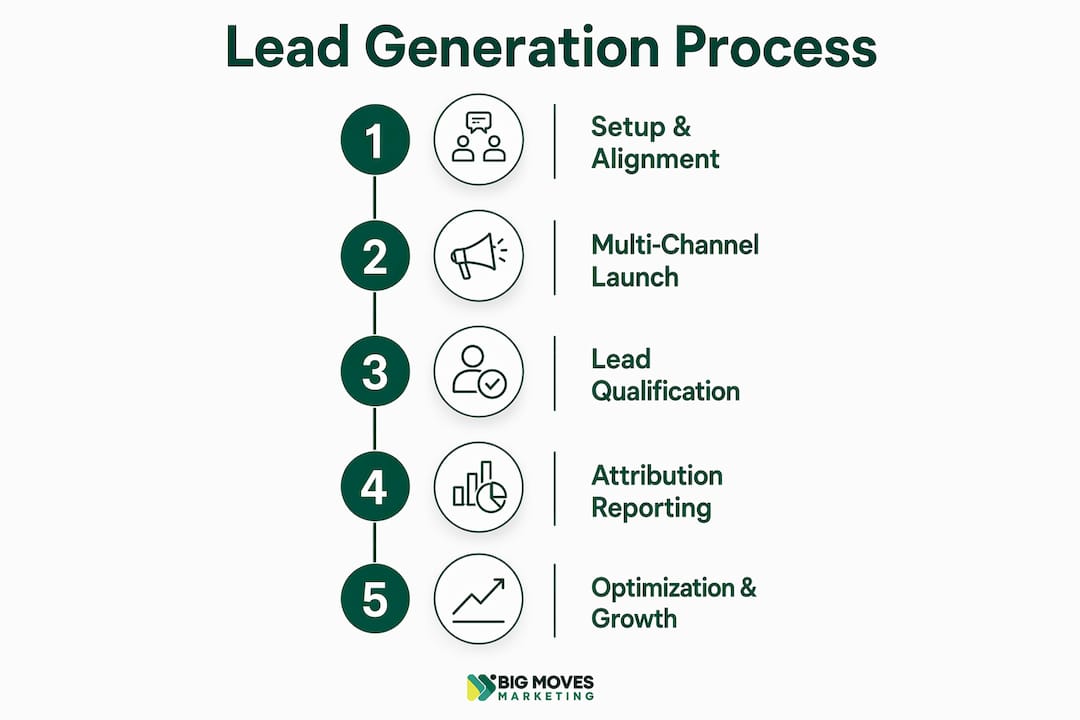
Agencies typically need a 30–45 day setup period to build infrastructure, align messaging, and configure CRM integrations before campaigns go live. After launch, programs mature over 3–6 months as data accumulates and targeting sharpens. Integrated multi-channel programs can deliver 2–3x pipeline growth within six months. That timeline is realistic, not a guarantee, and depends heavily on your market and offer.
Pro Tip: Ask any agency you evaluate to show you a sample attribution report. If they cannot connect campaign activity to closed-won revenue in their CRM, they are measuring the wrong things.
Pricing varies by market, channel mix, and campaign scope. UK-based B2B agencies typically charge retainers of £1,500–£15,000 per month, with single-channel programs at the lower end and full multi-channel programs at the top. Most agencies also charge a setup fee of around £2,000 to cover infrastructure, strategy, and initial creative.
Cost per lead benchmarks shift significantly by industry. The table below reflects typical UK market ranges:
| Industry | Cost per lead (approx.) |
|---|---|
| SaaS | £40–£120 |
| Finance | £60–£180 |
| Legal | £85–£250 |
These figures reflect managed service retainers where the agency builds assets you own. Pay-per-lead models exist and avoid monthly fees, but agencies own the underlying assets in those arrangements. That means if you stop paying, the lead flow stops and you have nothing to show for it. Managed retainers build owned infrastructure that compounds over time.
A growing trend in 2026 is the pay-per-qualified-meeting model. Agencies charge around $150 per booked meeting that meets agreed qualification criteria. This model aligns agency incentives directly with client outcomes, which is a meaningful shift from traditional retainer structures.
Pro Tip: Negotiate a hybrid model: a base retainer that covers strategy and infrastructure, plus a performance fee per qualified meeting. This keeps the agency accountable without removing their incentive to build long-term assets.
The most important metric a lead generation agency should track is closed-won revenue, not Marketing Qualified Lead (MQL) volume. MQL counts are vanity metrics that agencies can inflate by lowering qualification thresholds. Revenue attribution requires CRM integration and honest reporting.
The metrics that genuinely reflect pipeline health include:
Sales reps typically spend 66% of their time on prospecting rather than selling. A well-run agency reclaims that time by delivering pre-qualified opportunities. The productivity gain alone often justifies the investment before you count the additional pipeline.
CRM-integrated attribution is the technical backbone of honest reporting. Without it, you are trusting the agency’s word on performance rather than your own data. Insist on direct CRM access or regular exports that you can verify independently.
Outsourcing lead generation is not a passive exercise. Active client engagement during the setup and refinement phases directly determines campaign quality. Agencies that work with unresponsive clients consistently produce worse results than those with engaged partners.
The practical steps for a productive agency relationship:
For B2B SaaS companies specifically, the lead generation for startups playbook differs from enterprise approaches. Startups need faster feedback loops and tighter channel focus. Agencies experienced with SaaS understand this distinction and structure programs accordingly.
Pro Tip: Share your CRM access with the agency from day one. Agencies with visibility into your full pipeline make better targeting and messaging decisions than those working from a spreadsheet.
After 17 years working with over 75 B2B tech and SaaS companies, I have seen the same pattern repeat. A company hires a lead generation agency, hands over a brief, and then waits for results. Six months later, they are disappointed. The agency blames the market. The client blames the agency. Both are partly right.
The real problem is almost always a mismatch between what the agency is measuring and what the business actually needs. Agencies default to reporting MQLs because MQLs are easy to count. Clients accept this because they do not know what else to ask for. The result is a pipeline full of contacts that never convert.
The fix is not finding a better agency. The fix is demanding closed-won revenue attribution from the first conversation. If an agency cannot show you how their campaigns connect to actual revenue in your CRM, they are not ready to be your partner.
The other pattern I see constantly is clients treating agency engagement as a set-and-forget service. The best results I have witnessed come from founders and CMOs who treat the agency like an extension of their internal team. They review lead quality weekly, push back on targeting assumptions, and refine messaging based on what their sales team hears on calls. That level of involvement is what separates a 2x pipeline outcome from a disappointing one.
For SaaS companies specifically, I always recommend pairing agency-led demand generation with a LinkedIn lead generation strategy built for your specific buyer persona. LinkedIn is where B2B buyers spend professional time, and it compounds well with paid and outbound programs.
— Veb
Bigmoves works with B2B SaaS and technology companies that need more than a vendor. They need a partner who understands positioning, messaging, and channel execution well enough to build programs that actually convert.
Veb and the Bigmoves team bring 17 years of experience across go-to-market planning, demand generation, and B2B SaaS website deployment built for conversion. Whether you are launching a new growth channel or rebuilding a pipeline that has stalled, Bigmoves designs programs around your specific buyer, your market, and your revenue targets. The work is grounded in attribution, not vanity metrics. If you are ready to build a lead generation program that connects to closed revenue, Bigmoves is the place to start.
A lead generation agency builds and manages multi-channel marketing programs that deliver qualified sales prospects to B2B businesses. These agencies combine paid media, content, ABM, and outbound outreach into one connected system.
UK B2B lead generation agency retainers typically range from £1,500 to £15,000 per month, depending on channel scope. Setup fees run around £2,000, and cost per lead ranges from £40 for SaaS to £250 for legal services.
Most agencies require a 30–45 day setup period followed by a 3–6 month maturation window. Paid channels produce faster results; content and SEO take longer but deliver compounding returns.
Track closed-won revenue attribution, Sales Accepted Lead rate, pipeline contribution, and cost per qualified meeting. MQL volume alone is a poor indicator of genuine pipeline health.
Yes. B2B SaaS companies benefit from integrated programs combining LinkedIn Ads, Google Ads, outbound prospecting, and content. Agencies experienced with SaaS understand shorter sales cycles and the importance of product-market fit in messaging.
A lead generation agency delivers qualified pipeline only when it runs integrated multi-channel programs tied to closed-won revenue attribution, not MQL volume.
| Point | Details |
|---|---|
| Integration beats single-channel | Multi-channel programs combining paid, ABM, content, and outbound deliver 2–3x more pipeline than siloed efforts. |
| Pricing varies by scope | UK retainers run £1,500–£15,000 per month; cost per lead ranges from £40 (SaaS) to £250 (legal). |
| Revenue attribution is the real metric | Track closed-won revenue and Sales Accepted Lead rate, not MQL counts, to measure genuine agency performance. |
| Active involvement drives results | Assign a dedicated internal contact and review lead quality weekly to keep campaigns on track. |
| Give programs time to mature | Expect 3–6 months before judging results; pulling the plug at 60 days is the most common and costly mistake. |




%20-%20white.svg)