%20png%20copy.avif)
Marketing a B2B tech product, whether it’s a SaaS platform or an AI tool, isn’t just about running a few ads. It’s about methodically positioning your product to attract, engage, and ultimately win over the right business customers. It all starts with building a strategic foundation—getting crystal clear on your customers, your message, and where to find them.
The real goal? To build a predictable engine for growth that you can scale.
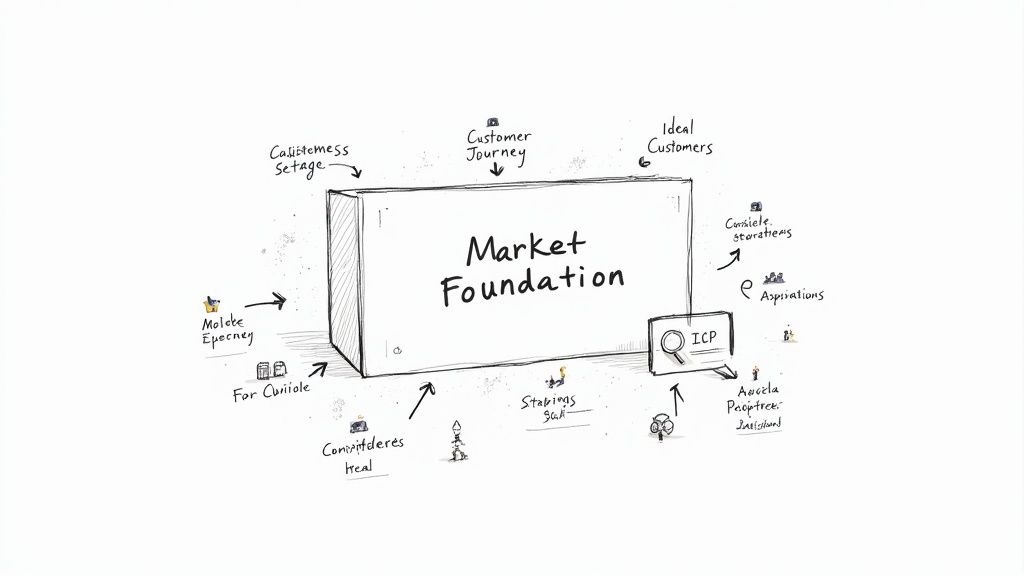
Here's a hard truth I've learned over the years: the most common reason B2B marketing campaigns fall flat is because they rush this first part. Before you write a single blog post or design an ad, you have to nail two fundamental questions: who are we, and who do we exist to serve?
Getting this foundation right ensures every marketing dollar and every hour you spend is aimed at the right people with a message that actually connects. It's about being surgical from the very start.
Your Ideal Customer Profile (ICP) is a detailed description of the perfect-fit company for your product. We're not talking about individual people just yet. This is all about identifying the organizations that will get the most value from your solution and, in turn, become your best, most profitable customers.
You need to go deeper than just basic firmographics like industry and company size. A truly useful ICP gets into the operational and strategic DNA of your best-fit customers.
Here’s what you need to lock down for your ICP:
A well-defined ICP acts as a filter for everything you do in marketing and sales. It's your guardrail, stopping you from wasting time and money on companies that will never buy, will churn in three months, or will cost a fortune to support.
Okay, so you know the companies you're after. Now, you need to understand the people inside those companies who actually make the buying decisions. This is where your Buyer Persona comes in.
Think of it this way: your ICP is strategic (which companies to target), while your Buyer Persona is tactical (how to talk to the people at those companies).
In most B2B tech sales, you're not selling to just one person. You might have an "Economic Buyer," like a VP of Operations who holds the budget, and an "End User," like a project manager who will use the tool daily. Each one cares about different things.
This table should help clarify the difference between these two critical concepts.
Defining both your ICP and your personas gives you a complete picture, ensuring your marketing strategy is both precisely targeted and deeply resonant.
With your ICP and personas locked in, you can map out their path to purchase. The B2B buyer's journey is rarely a straight line. It’s a messy, winding road of identifying a problem, exploring different solutions, and carefully evaluating vendors.
Mapping this journey lets you create content and touchpoints that are actually helpful and relevant at each stage. You stop shouting a generic sales pitch and start having a useful, guiding conversation. It's how you build trust long before they're even thinking about talking to sales.
This map tells you what to say and when to say it, which naturally leads to a much stronger articulation of your product's core benefits. If you want to dive deeper on that, you can learn more about how to articulate your core benefits by reading our guide on what is a value proposition. This foundational messaging is what sets the stage for every successful marketing action that follows.
Once you've nailed down your core message, the next challenge is figuring out where to deliver it. Spreading your budget thinly across every channel is a classic B2B tech marketing mistake, a surefire way to burn cash with little to show for it. The real magic happens when you build an integrated system where each channel plays its part and makes the others stronger.
This isn't about jumping on every new, shiny platform. It's about a deliberate, focused approach that moves your ideal buyers from "who are you?" to "here's my credit card."
When a potential business customer opens up Google and types in a problem they need to solve, that’s the loudest buying signal you’ll ever get. This is exactly why search advertising, even after all these years, remains an absolute pillar of B2B tech marketing. It’s your chance to show up at the precise moment a high-intent prospect is looking for what you do.
And the numbers back this up, big time. Search advertising is the largest slice of the digital marketing pie, with a projected market volume of $202.4 billion. In the US alone, spending on paid search is expected to hit $124.59 billion in 2024, an 11.1% jump from the previous year. With 93% of all website traffic starting from a search engine, being visible isn't just a good idea—it's how you acquire customers.
But just being found isn't the goal. You need to be found by the right people. Your search strategy has to be tightly woven with your ICP. That's how you stop buying clicks and start investing in conversations with future customers.
Search ads are fantastic for capturing immediate demand, but content marketing is what builds your long-term authority and earns you trust. In the world of complex B2B tech, nobody makes a snap decision. In fact, business buyers consume an average of 13 pieces of content before they even think about choosing a vendor. Your job is to be the one providing the most valuable, insightful, and genuinely helpful information on their journey.
That means rolling up your sleeves and creating assets that answer their real questions and solve their operational headaches.
This content isn't just for attracting organic traffic; it's the fuel for your entire marketing engine. It becomes the substance for your social posts, the bait for your email nurture sequences, and the evidence your sales team uses in their conversations. Building the right B2B channel mix is what ensures this amazing content actually gets in front of the right people.
For B2B tech companies selling high-value solutions, casting a wide net is just wasteful. This is where Account-Based Marketing (ABM) changes the game. Instead of marketing to everyone, ABM focuses all your marketing and sales firepower on a hand-picked list of your absolute best-fit target accounts.
It completely flips the traditional marketing funnel on its head.
This methodical, almost surgical, approach ensures every touchpoint is relevant, leading to much higher engagement and a smoother sales process for the accounts that matter most.
Platforms like LinkedIn are so much more than just a place to run ads; they're communities. For a B2B tech company, this is a golden opportunity to build real connections and establish your brand as a helpful, authoritative voice in your space.
Your strategy here needs to have two parts. Yes, use targeted ads to get your valuable content in front of your ICPs and buyer personas. But just as important, get your team's subject matter experts involved in the conversation. Encourage them to share their knowledge, answer questions, and build their own professional brands.
This human-to-human interaction builds a kind of trust that no ad ever could, making it an essential piece of any modern tech company's marketing plan.
Alright, you've got your channel strategy sorted. Now for the fun part: bringing it all to life. We're moving from planning to doing, building out demand generation campaigns that do more than just make noise—they create a predictable pipeline of genuinely qualified leads for your sales team.
This isn't about random acts of marketing. We're talking about integrated, multi-touch campaigns built around a central, high-value asset. This is your anchor piece, the thing that earns you the right to have a conversation.
At the heart of any great B2B demand gen campaign is a piece of content so valuable that your ideal customers will happily trade their contact information for it. This isn't just another blog post. It's a resource that solves a real problem or delivers unique, game-changing insight.
The trick is to create "pillar" assets that you can break down and promote for weeks, not just days.
The goal is to create something that feels like a genuine gift of expertise. When you lead with generosity, you build trust and earn the right to start a deeper conversation about your solution.
Marketing has evolved to support these more sophisticated, value-driven approaches, moving far beyond the old "spray and pray" methods.
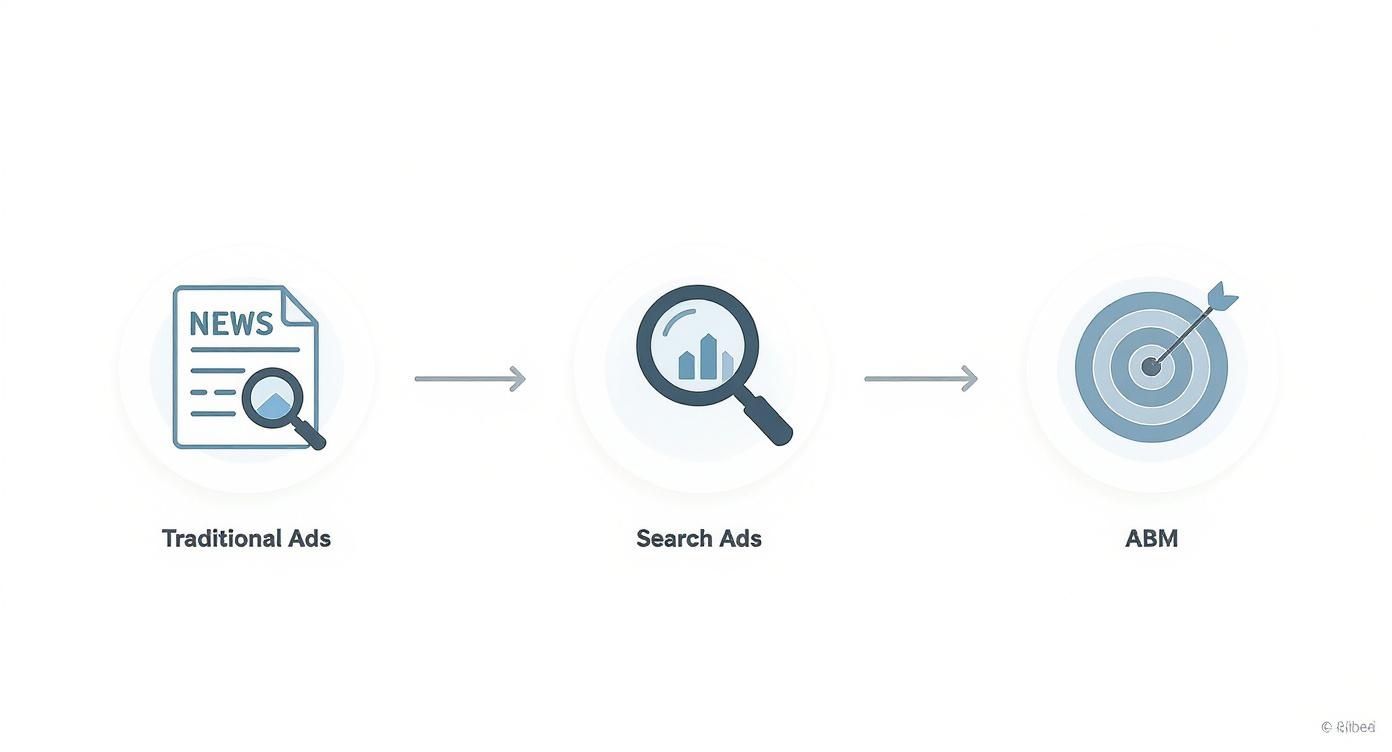
This shift from broad, passive advertising to hyper-targeted engagement really underscores why these value-first strategies are so critical today. You have to earn attention.
Let's be real: a single ad click or email open almost never leads to a sale in B2B tech. A winning campaign is a carefully orchestrated sequence of touchpoints designed to educate, build trust, and gently guide a prospect forward.
Let's imagine we're running a campaign for that proprietary data report we talked about. The flow would look something like this:
Your email nurture sequence is your automated trust-building machine. The secret is to make it feel human and genuinely helpful, even though it's automated.
For our data report campaign, a simple three-part nurture sequence might look like this:
This approach respects the buyer's journey by offering more information and deeper engagement over time. You become a helpful guide, not just another vendor pushing for a demo. If you want to dig deeper into these kinds of tactics, there are plenty of proven B2B lead generation strategies you can explore to really sharpen your approach.
Here's a sample timeline to help you visualize how a campaign like this could play out over a 6-week period.
This table breaks down a typical 6-week promotional cycle for a webinar campaign, showing how different activities build on each other from pre-launch to post-event follow-up.
This kind of structured timeline ensures you get the most mileage out of your high-value asset, engaging prospects before, during, and long after the main event.
Ultimately, building out a full demand generation strategy is what creates a predictable engine for growth. It’s how you turn your marketing efforts from a cost center into a powerful revenue driver—a machine that consistently delivers qualified opportunities to your sales team, fueling your company's ambition.
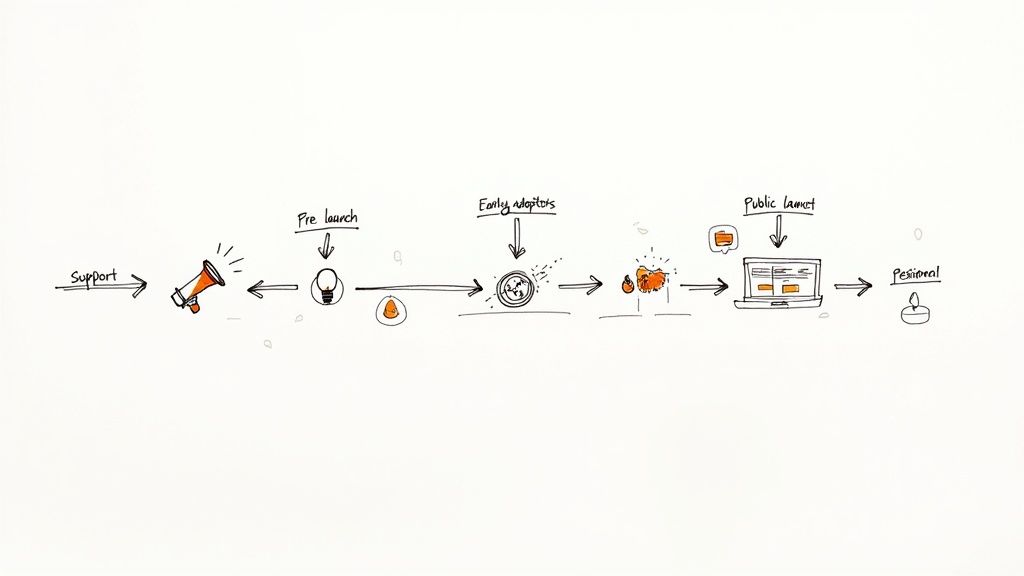
A product launch is one of those rare, make-or-break moments that can set the entire trajectory for your company. It’s so much more than just flipping a switch and sending out an announcement. A truly successful B2B tech launch is a meticulously planned campaign, designed to build genuine anticipation, capture market attention, and drive immediate adoption.
This isn't about a single day on the calendar. It's about orchestrating a narrative that positions your product not just as new, but as necessary.
Before you can even think about press releases or social media blasts, you need absolute internal alignment. I’ve seen it happen: a disjointed launch is a dead launch. This means getting product, marketing, sales, and customer support into a single, cohesive unit with a shared understanding of the strategy.
Everyone must be fluent in the core messaging and know their specific role. Sales needs to know who to call and what to say, support needs to be ready for the inevitable flood of questions, and marketing needs to own the story.
This internal readiness is the launchpad for everything that follows. It ensures a consistent, confident message is delivered to the market at every single touchpoint, creating a seamless experience for your first wave of new customers.
The biggest mistake I see B2B tech companies make is treating a product launch like a single, massive event for everyone at once. A far more powerful approach is a tiered, or phased, launch. This strategy is all about control, building momentum, and banking critical social proof before you go broad.
Think of it as a series of concentric circles, moving from the inside out.
This tiered method transforms your launch from a hopeful announcement into a validated event. It allows you to enter the public conversation with momentum already on your side, which is a massive advantage.
A launch isn't just one piece of content; it's a full arsenal of materials designed to empower your teams and educate the market. Your marketing and product marketing teams should be working weeks in advance to build out this toolkit.
You'll need a comprehensive set of resources ready to go:
Having these assets prepared beforehand allows your team to focus entirely on execution during launch week. If you're looking for a structured way to manage all these moving parts, using a detailed product launch checklist template can be a game-changer for keeping everything organized and on track.
The work doesn't stop once the "launch" button is pressed. In many ways, it's just beginning. The 30-60 days following your launch are critical for turning initial interest into sustained adoption and building a pipeline of customer stories.
This is the time to be relentless. Your focus should shift immediately to capturing and amplifying the stories of your newest users.
Actively seek out your happiest new customers and guide them toward becoming advocates. Co-create detailed case studies with them, featuring hard data and measurable results. Record video testimonials where they can share their excitement in their own words. This content becomes the fuel for all your marketing efforts moving forward, proving your product’s value with the most powerful tool you have: the voice of a satisfied customer.
Let's be blunt: the most brilliant demand gen campaign on the planet is worthless if your sales team can't close the deals it generates. Marketing’s job doesn't just stop at the handoff. It stretches deep into the sales cycle. Real, sustainable growth happens when marketing acts as a force multiplier for sales, giving them the exact tools they need to navigate tough conversations and win.
This is the entire point of sales enablement. It’s about taking all that powerful messaging and deep market insight you’ve developed and turning it into practical, battle-tested assets that salespeople will actually use. When marketing and sales are moving in lockstep, you see shorter sales cycles, higher close rates, and a story that stays consistent from the first ad a prospect sees to the final handshake.
Your sales team is in the trenches every single day, fielding pointed questions and getting hammered with direct comparisons to other companies. Your role is to build them an arsenal of content that instills confidence, makes your value crystal clear, and systematically dismantles every objection a buyer might have.
These aren't just "nice-to-have" documents. For a high-performing B2B tech sales team, they're absolute essentials.
The only true test of a sales enablement asset is whether the sales team uses it. If it’s just gathering digital dust in a forgotten folder, it’s a failure. The secret to adoption? Build the assets with them, not just for them.
The best sales enablement programs are born from intense collaboration. Marketing has to get out of its bubble and spend real time in the sales team's world. This means jumping on sales calls, listening to the recordings, and setting up regular, honest feedback sessions.
What are the specific questions that keep stumping reps? At what stage are deals most likely to stall out? The answers to these questions are pure gold. They give you a crystal-clear roadmap for creating the exact content that will have the biggest impact on the bottom line.
For instance, if you keep hearing that prospects are struggling to build a business case, your top priority should be creating a killer ROI calculator or a detailed financial impact brief. This direct feedback loop transforms marketing from a support function into a strategic partner in closing business. To really take your team's game to the next level, check out these insightful sales enablement best practices for more ways to refine your strategy.
As a deal inches closer to the finish line, the kind of support sales needs begins to shift. The focus moves away from broad education and toward specific, deal-closing documents that formalize the value you’ve spent weeks demonstrating. It's not enough to pitch well; your team needs to master the art of writing a compelling business proposal that gets the ink on the contract.
This is another area where marketing can provide huge value with templates and frameworks that guarantee a professional, consistent look and feel.
By providing these foundational pieces, marketing frees up the sales team to do what they do best: sell. They can create customized, high-impact documents in a fraction of the time, without ever having to wrestle with formatting. That partnership is what defines a truly world-class tech company marketing engine.
Look, building a marketing engine for a tech company isn't about running a few campaigns and calling it a day. You're building a predictable growth machine, and that brings up some tough, recurring questions.
These are the conversations that happen in boardrooms and heated team meetings. Getting the answers right is what separates the marketers who just spend budget from the ones who actually drive revenue. Let's tackle them head-on.
Forget about just tracking cost-per-lead. In B2B tech, with its long sales cycles and crowded buying committees, you need a much sharper view of what’s working. While MQLs and SQLs are part of the story, the metrics that truly matter are the ones your CEO and CFO care about—the ones tied directly to revenue.
To get a real picture of your impact, you need to live and breathe these numbers:
Pipeline Contribution: What percentage of the sales pipeline did marketing directly source? This is a massive indicator of your influence on future revenue. It's the number that proves you're not just busy, you're creating real opportunities.
Customer Acquisition Cost (CAC): Get brutally honest about this one. Calculate the total marketing and sales spend it takes to land a new customer. The game here is to consistently drive this number down over time as you get smarter.
LTV to CAC Ratio: This is the gold standard, the ultimate proof of a healthy business. A strong ratio, often aiming for 3:1 or better, proves you aren't just acquiring any customers—you're acquiring profitable ones who stick around.
The biggest mindset shift is moving from seeing marketing as a cost center to measuring it as a revenue driver. When you can draw a straight line from a specific webinar or content series to a "closed-won" deal, that’s when you've cracked the code.
This is the classic debate, but framing it as an "either/or" choice is a trap. The reality is, Inbound and Account-Based Marketing (ABM) aren't opposing forces; they're two sides of the same coin. The most powerful strategies use both.
Think of inbound marketing as your wide net. Through great content, SEO, and building a brand people trust, you consistently capture demand from companies that are actively looking for a solution like yours. It’s how you build a steady, predictable flow of leads into your pipeline.
ABM, on the other hand, is your spear. It's for that curated list of "dream" clients—the ones you know are a perfect fit but might not be looking for you right now. With ABM, you go after them with highly personalized, coordinated campaigns across multiple channels and contacts.
Here’s a simple way to look at it: Inbound fills the top of your funnel with companies that have raised their hands, while ABM ensures you never miss a shot with your absolute best-fit accounts. The magic in a great tech company marketing strategy is finding the right blend of both, tailored to your average deal size and growth goals.
The old, rigid marketing silos are dead. Today's most effective B2B tech marketing teams are built around the customer journey, not just channels. They’re agile, obsessed with data, and operate in lockstep with the sales team.
A high-performing team structure usually revolves around these core functions:
Demand Generation: This isn't just about leads. This team owns the entire journey from initial awareness to creating a predictable sales pipeline, running all the campaigns that make the phone ring.
Product Marketing: They are the critical bridge between the product team and the market. They own the positioning, messaging, go-to-market for new launches, and—crucially—all the sales enablement that helps reps win.
Content & Brand: This is the fuel for everything else. This team creates the blog posts, webinars, case studies, and compelling brand story that powers every demand gen campaign and sales conversation.
Marketing Operations: The technical backbone. This group manages the martech stack, automation, and data analysis to make sure the entire marketing engine is running smoothly and efficiently.
This kind of structure ensures every single marketing activity is tightly aligned with the only goal that really matters: driving measurable business growth.
At Big Moves Marketing, we build these kinds of powerful, revenue-focused marketing engines for B2B SaaS and AI startups. If you need help with positioning, launching a new product, or equipping your sales team to win more deals, let's connect. Find out how we can help at https://www.bigmoves.marketing.
Explore Big Moves Marketing services and resources:





%20-%20white.svg)