%20png%20copy.avif)
Shopify's October 2025 updates to the Built for Shopify (BFS) program represent the most significant shift in app discoverability since the App Store launched. These changes aren't just incremental improvements - they're a complete restructuring of how merchants discover, evaluate, and install apps.
Here's what you need to understand, what's changing, and how to respond strategically.
Let's start with the numbers that matter.
According to Shopify's official announcement, apps that achieve Built for Shopify status see an average 49% increase in new installs within just 14 days of earning the badge. That's not over months or quarters—that's two weeks.
In an ecosystem with over 12,320 apps competing for attention (as of January 2025), this kind of visibility boost is worth its weight in gold. Especially when you consider that 87% of Shopify merchants use apps to run their stores, with the average merchant installing six apps.
But here's the uncomfortable truth most app developers don't want to hear: organic App Store discovery is dying as the primary growth channel.
According to Market Clarity's analysis of top-earning apps, every Shopify app earning over $5M monthly grew primarily through external channels—agency partnerships, content marketing, and influencer relationships. Relying solely on App Store organic traffic means competing for top 3 rankings among hundreds of apps, which can take 6+ months even in less competitive categories.
The Built for Shopify badge is Shopify's answer to this discovery crisis. It's their way of creating a quality filter that helps merchants find trustworthy apps while simultaneously rewarding developers who invest in excellence.
Shopify didn't just tweak the program - they fundamentally enhanced both the benefits and requirements. Let's break down what's new.
1. Priority Visibility Across the Shopify App Store
This is the big one. BFS apps now get:
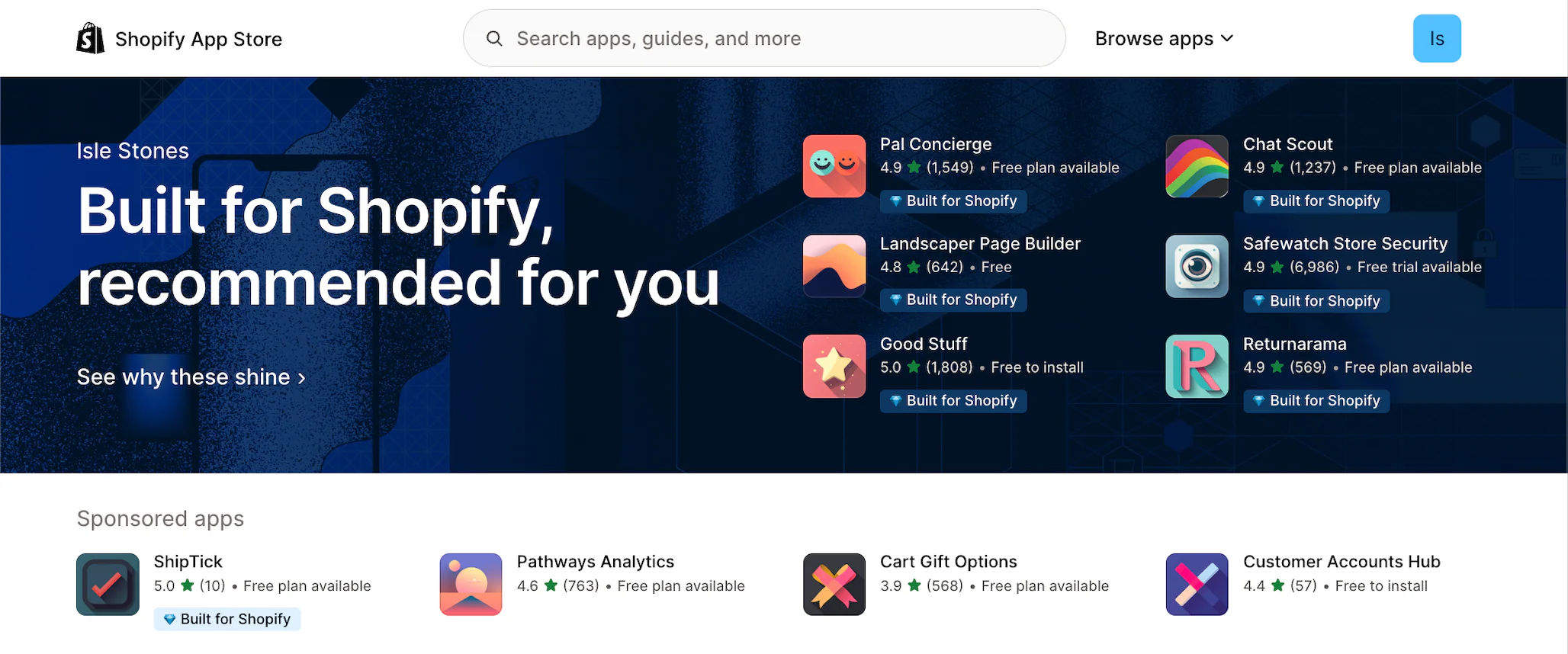
Think about the user journey: a merchant lands on the App Store, sees your badge prominently displayed, clicks to learn what it means, and discovers that your app meets Shopify's highest standards. That's not just visibility—that's credibility at the point of decision.
2. Sidekick Recommendations
Shopify Sidekick, Shopify's AI assistant, now recommends apps directly in the admin. As of September 2025, Sidekick can recommend, compare, and even install apps from the chat interface.
Here's why this matters: merchants are increasingly asking Sidekick questions like "What's the best app for product reviews?" or "Show me email marketing apps that integrate with Klaviyo." The comparison tool clearly highlights Built for Shopify status, making it easy for merchants to choose quality.
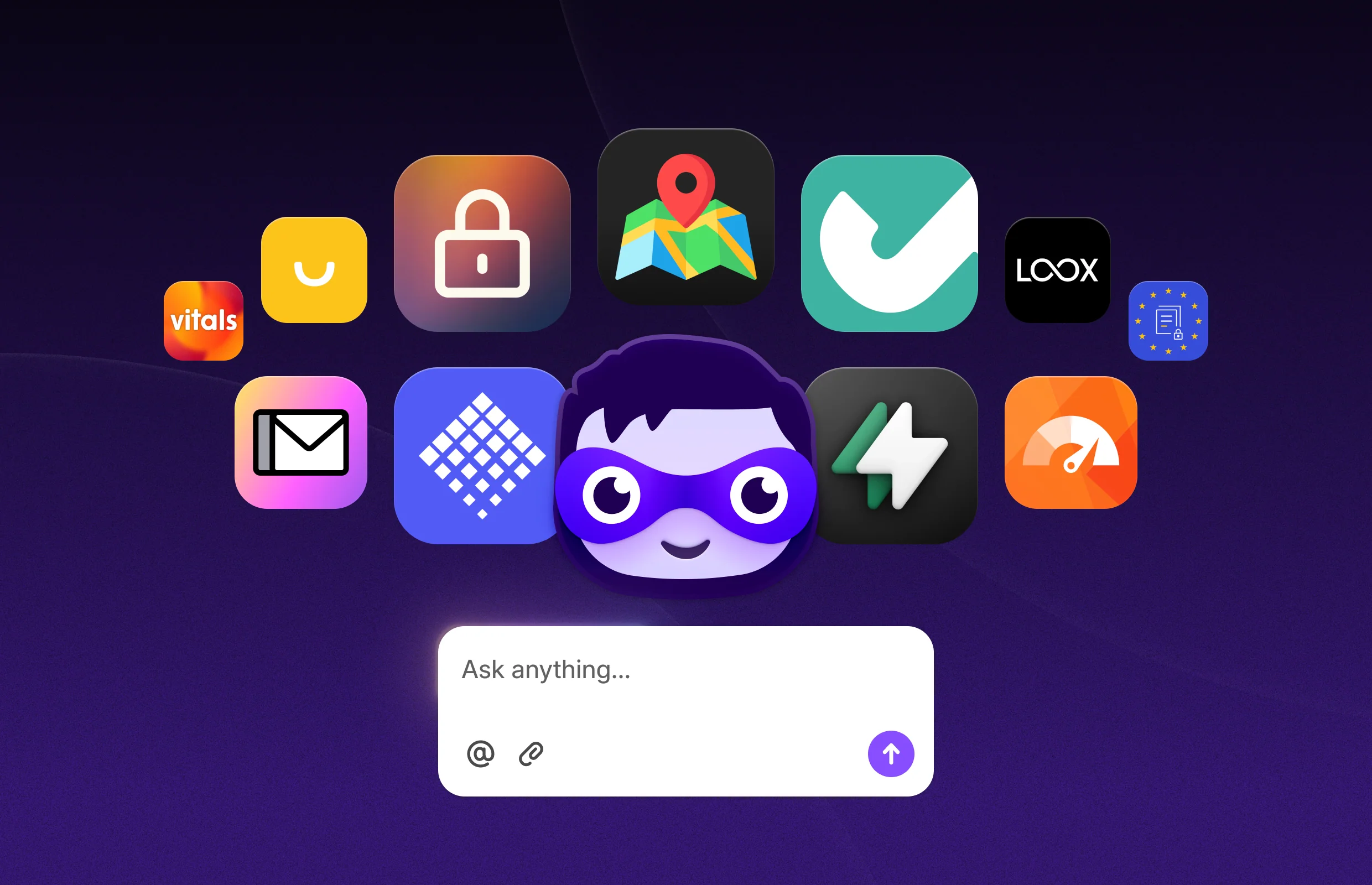
This is conversational commerce discovery—and you either have the badge or you don't.
3. Built for Shopify Media Kit
Finally, Shopify is giving app developers official marketing assets. The media kit includes:
You can now legitimately market your BFS achievement across your website, email campaigns, social media, and sales materials. This turns your badge from a passive indicator into an active marketing asset.
4. Merchant Plan-Based Ad Targeting
This is a game-changer for paid acquisition. BFS apps now have exclusive ability to target App Store ads by merchant plan:
For context, there are approximately 67,333 Shopify Plus stores, which represent the highest-value merchants in the ecosystem. Being able to target them specifically with search, category page, and homepage ads dramatically improves your advertising ROI.
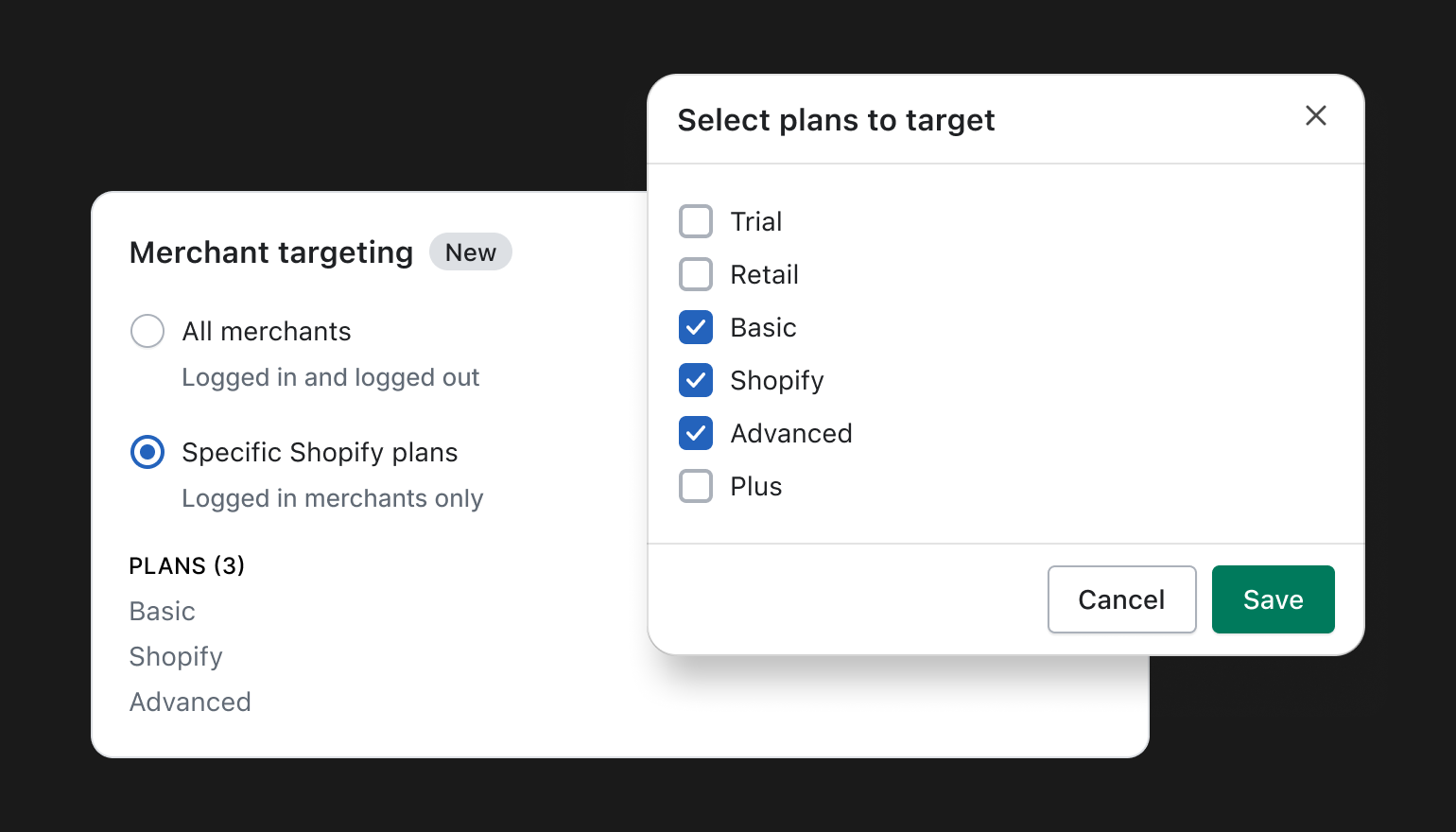
According to Shopify's documentation, this level of targeting precision was previously unavailable to any apps, regardless of status.
5. Standalone Search Filter
Merchants can now filter the entire App Store to show only Built for Shopify apps. This creates a quality-first discovery path that completely bypasses non-BFS apps.
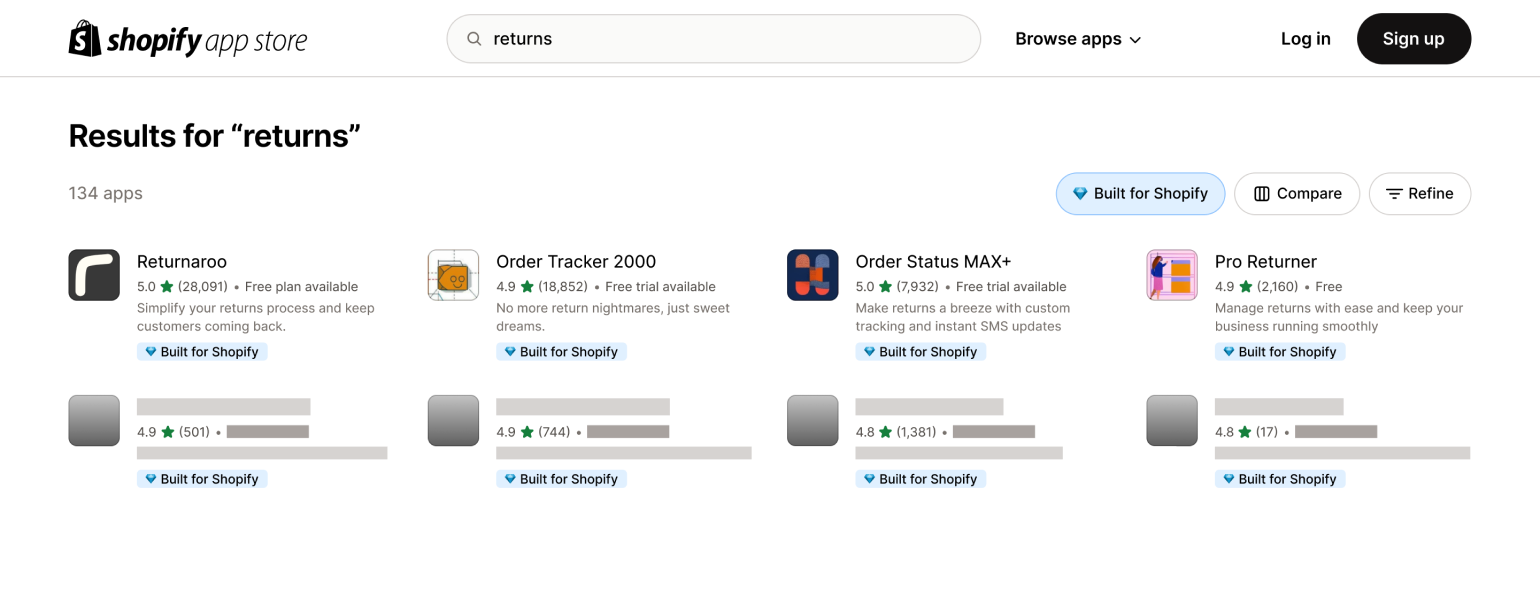
Research shows that 81% of merchants surveyed said highlighting performance, ease of use, reliability, and safety factors has a major impact on their decision to install an app. The BFS filter makes it dead simple for quality-conscious merchants to find you.
Shopify isn't handing out these benefits for free. They've added new criteria, effective July 2025:
General Requirements (All Apps):
Category-Specific Requirements:
For the first time, Shopify is rolling out category-specific criteria for:
Each category has its own technical requirements ensuring deep platform integration. For example, subscription apps must properly implement Shopify's subscription APIs rather than building workarounds.
Annual Reviews:
All BFS apps will undergo annual reviews to ensure they still meet current criteria. Failing certain criteria can result in losing your status and badge.
This means BFS is no longer a "set it and forget it" achievement—it's an ongoing commitment to quality.
Let's talk about what Built for Shopify status actually delivers in practice, based on developer experiences and data.
Developer Farid Movsumov shared detailed numbers after two of his apps earned BFS status. His apps moved to the first page of their main category (bulk editor apps), though he noted that less popular categories don't drive significant traffic even with improved rankings.
The key insight: category popularity matters as much as your ranking within it. If you're in a high-traffic category like email marketing or product reviews, improved rankings translate to substantial install growth. In niche categories, the visibility benefits are more limited.
Research from Shopify indicates that the badge acts as a powerful trust signal. When merchants see the Built for Shopify badge, they perceive the app as:
This is particularly valuable for newer apps trying to compete against established players. The badge levels the playing field by signaling quality independent of review count or install base.
Getting BFS status isn't trivial. Movsumov rebuilt one of his apps from scratch, working intensely (evenings and weekends) to meet all criteria. The timeline:
Total investment: roughly 50-60 days of focused development work, assuming you can reuse some backend logic.
This aligns with my own experience. Meeting BFS criteria isn't about ticking boxes—it's about fundamentally rethinking your app's architecture, UI/UX, performance profile, and integration depth.
Based on the changes and supporting data, here's my analysis of how different types of apps should respond:
If you're in email marketing, SMS, product reviews, or other high-install-volume categories: BFS status is mandatory.
The combination of improved search rankings, Sidekick recommendations, and the standalone filter creates a compound visibility advantage that will only grow over time. Given that approximately 87% of Shopify merchants use apps and the average merchant installs six apps, being visible in high-traffic categories is the difference between growth and stagnation.
Your priority: Audit your app against all current and upcoming BFS criteria immediately. Map out a development roadmap to achieve compliance by July 2025 at the latest.
If you serve a specific vertical or solve a narrow problem: BFS status is valuable but not urgent.
The reality is that niche apps often grow through direct sales, agency partnerships, and content marketing rather than App Store organic discovery. The Market Clarity analysis confirms this: successful developers in specialized categories derive 30-50% of installs from external channels like YouTube tutorials, SEO content, and community engagement.
That said, the media kit and merchant plan targeting are valuable even for niche apps. Being able to advertise specifically to Shopify Plus merchants or retail stores creates targeting precision that improves paid acquisition economics.
Your priority: Evaluate whether BFS criteria align with your current development roadmap. If you're already planning major improvements to performance, UX, or integration depth, bundle BFS compliance into that work. If not, focus on your existing growth channels and consider BFS as a medium-term goal.
If you primarily serve enterprise customers: BFS status just became essential.
Shopify explicitly stated that BFS criteria are being extended to the Plus Certified App Program (PCAP). This means maintaining a single set of high-quality standards across all certified apps.
Given that there are approximately 67,333 Shopify Plus stores and enterprise merchants have higher lifetime values and lower churn, the ability to target them specifically with ads while displaying the BFS badge creates a significant competitive moat.
Your priority: Achieve BFS status as a prerequisite for PCAP certification. Map out the technical requirements and allocate development resources now, as the review queue will likely get longer as the July 2025 deadline approaches.
If you're building a new app: design for BFS compliance from day one.
This is the biggest gift Shopify has given to new app developers. The criteria are clear, documented, and actionable. Rather than launching and then retrofitting for BFS, build your app's architecture, UI components, and performance profile with these standards in mind from the start.
Developers with Built for Shopify status get priority review when submitting additional apps in future, meaning your second, third, and fourth apps will move through approval faster once you've proven you understand Shopify's quality standards.
Your priority: Use the BFS requirements documentation as your product specification. Every technical decision should be evaluated against these criteria.
These changes reflect a broader strategic direction from Shopify: elevating quality over quantity in their app ecosystem.
Consider the data: the Shopify App Store grew by 50.48% between 2022 and 2023, then declined 8.15% between 2023 and 2024. This wasn't accidental—Shopify actively removed apps that no longer met quality standards.
The message is clear: Shopify would rather have 10,000 excellent apps than 15,000 mediocre ones.
This is good for everyone:
The losers in this shift are developers who:
According to Market Clarity's research, approximately 85-90% of apps fail to generate meaningful income, with 34.98% having zero reviews (indicating complete failure) and 54.53% of developers earning under $1,000 monthly.
Built for Shopify is Shopify's mechanism for separating the top 10-15% of apps from the rest.
Based on everything above, here's what I recommend:
Review the full BFS requirements and identify gaps. Key areas:
Create a prioritized list of what needs to change.
Model the potential impact:
Compare this against your development costs and timeline. For most apps in competitive categories, the math strongly favors prioritizing BFS compliance.
Break down the work required:
Allocate realistic timelines. Based on developer experiences, expect 1-3 months of focused work depending on your starting point.
Once you achieve BFS status:
The badge is only valuable if you actively promote it.
Here's what nobody wants to say but everyone needs to hear: most Shopify apps aren't very good.
They're built by developers who:
This is why 54.53% of developers earn under $1,000 monthly and why 34.98% of apps have zero reviews.
Built for Shopify forces you to confront this reality. You either invest in building something genuinely excellent, or you accept that your app will remain in the bottom 85% that fails to generate meaningful income.
The good news? The criteria are clear. The path is defined. The benefits are substantial.
You just have to decide whether you're willing to do the work.
After five years and nearly 20 apps, here's what I know for certain: the gap between good apps and great apps compounds over time.
A good app might generate steady installs through basic App Store presence. A great app with Built for Shopify status gets:
These advantages compound. Month over month, quarter over quarter, year over year.
The developers who take BFS seriously in 2025 will be the ones who dominate their categories by 2027. The ones who dismiss it as "just a badge" will still be struggling to hit $5K MRR while wondering why their competitors are crushing it.
The choice is yours.
Worried about the impact of changes on your Shopify App? Get a free consultation and understand more - www.bigmoves.marketing/start
Explore Big Moves Marketing Shopify App Growth services:



%20-%20white.svg)