%20png%20copy.avif)
This is an analysis blog onthe originally published article on DesignRush
Here's a number that should make every B2B marketer pause: 78% of B2B marketers believe that interactive and experiential content increases repeat engagement. They know it works. They've seen the data. They understand the value.
Yet only 30% have actually built mature experiential marketing programs.
That's a 48-point gap between belief and execution—a chasm representing one of the biggest missed opportunities in B2B marketing today. While your competitors churn out another white paper or AI-generated blog post, there's a proven content approach sitting right in front of you that most marketers acknowledge works but aren't using.
After two decades building marketing programs for both scrappy startups and enterprise behemoths, I've watched this pattern repeat itself across industries. Marketing teams know what works, but they default to what's comfortable. The result? A sea of sameness in a market demanding differentiation.
If you're still relying primarily on static content to build trust with B2B buyers in 2026, you're fighting an uphill battle with one hand tied behind your back.
We're in the middle of a perfect storm. 81% of B2B marketers now use generative AI tools, flooding the internet with more content than ever before. Meanwhile, only 4% highly trust AI outputs, and buyers are becoming increasingly skeptical about what they read.
Your buyers aren't stupid. They can spot AI-generated content from a mile away. The formulaic structure, the generic examples, the complete absence of genuine insight—it's all contributing to what I call "content fatigue."
But here's what's interesting: while trust in content is declining, interactive content generates 2x more engagement than passive content. Buyers spend an average of 8.5 minutes viewing static content but 13 minutes viewing interactive content. That's a 52.6% increase in engagement just by making content experiential.
The market is literally telling us what it wants. We're just not listening.
Experiential content isn't just events and conferences. That's thinking too narrowly.
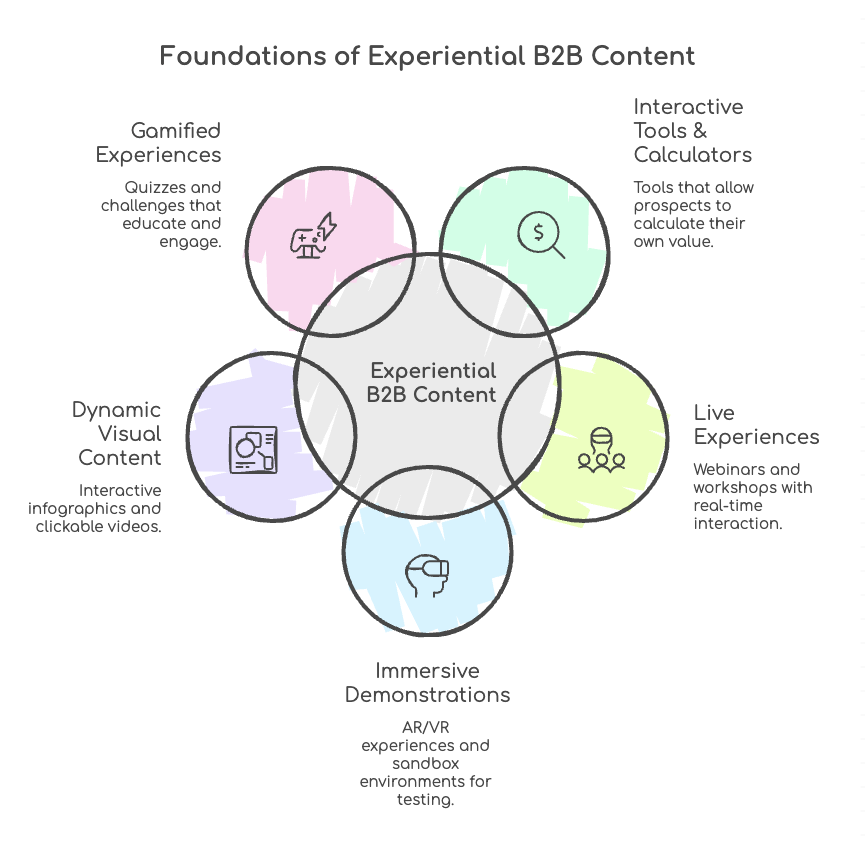
Experiential content is any content format that requires active participation rather than passive consumption. It's the difference between reading about how something works and actually using a tool that demonstrates it. It's the difference between watching a product video and interacting with a live demo.
In practical terms, experiential B2B content includes:
ROI calculators, configurators, assessment tools, diagnostic platforms. These don't just tell prospects about value—they let prospects calculate their own specific value.
Webinars with real-time Q&A, virtual workshops, live streaming events, roundtable discussions. Webinars achieve 213% ROI on average, with 40-50% of registrants attending live.
Interactive product tours, AR/VR experiences, sandbox environments where prospects can actually test your solution.
Interactive infographics, data visualizations that respond to user input, clickable video content. Videos with interactive elements see a 47% increase in viewer engagement.
Quizzes, assessments, challenges, and competitions that educate while engaging.
The key differentiator? Experiential content creates a dialogue. Static content broadcasts a monologue.
Here's where conventional wisdom about B2B buying gets demolished by actual research.
For years, we've operated under the assumption that B2B purchases are purely rational decisions. Logic. ROI. Feature comparisons. But research from Google and the CEB Marketing Leadership Council reveals something surprising: B2B customers are significantly more emotionally connected to their vendors than B2C consumers are to brands.
Think about that. The stakes are higher in B2B. Careers are on the line. Reputations are at risk. When you're recommending a $500K software purchase to your CFO, you need more than a spec sheet—you need confidence. You need to feel it.
Research shows that emotions account for approximately 50% of B2B buying decisions, not the 5% that rational analysis might suggest. Another study found that 56% of the final purchase decision is based on emotional factors.
Four emotions drive B2B buying decisions more than any others:
You can't build these emotions with a PDF. You build them through experiences.
Today's B2B buyers consume 10-15 pieces of content before making a purchase decision. They spend 70% of their buying journey researching independently before ever contacting a vendor. 71% say engagement with content is harder than ever.
In this environment, how do you stand out? Not with your 47th blog post about industry trends. You stand out by giving buyers something they can actually use—a tool that provides personalized insights, a live experience where they can ask questions in real-time, an interactive assessment that helps them understand their own challenges better.
70% of buyers prefer interactive formats for learning about complex B2B topics. When you think about it, this makes perfect sense. B2B purchases are complex. Multiple stakeholders. Long sales cycles. High stakes. Buyers need to build confidence over time, and experiential content accelerates that confidence-building process.
Based on research from top B2B marketing organizations and two decades of hands-on experience, here's the framework that actually works:
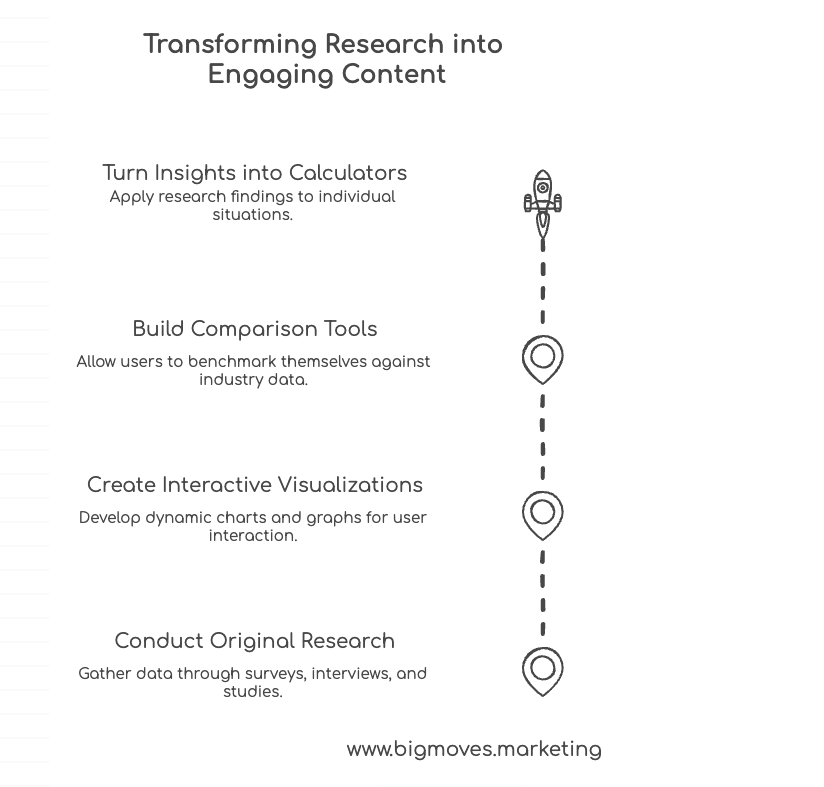
Start with original research. 93% of B2B marketers using original research-based content report it's effective at driving engagement and leads.
But don't just publish the research as a static report. Make it experiential. Create interactive data visualizations where users can filter by industry, company size, or geography. Build comparison tools that let prospects benchmark themselves against the data. Turn insights into calculators that apply research findings to individual situations.
I've seen this work brilliantly. One cybersecurity client took their annual industry report and created an interactive "security posture assessment" tool. Prospects could input basic information about their environment and get personalized insights based on the research data. The tool generated 3x more qualified leads than the traditional PDF report ever did.
Here's a stat that stopped me in my tracks: 74% of marketers who frequently collaborate with influencers report research-based content as "very effective" compared to just 29% of everyone else.
That's a 2.5x effectiveness multiplier just from adding influencer collaboration.
But we're not talking about Instagram influencers here. In B2B, influencers are industry experts, analysts, practitioners with real expertise. Co-create experiential content with these voices:
The influencer's credibility transfers to your brand, and the live, interactive format creates genuine value that static content never could.
Don't put all your eggs in one basket. The most successful programs I've built use multiple experiential formats working together:
Video-First: 87% of B2B marketers use video, and 61% plan to increase video investment. But make it interactive. Add clickable elements, branching paths, embedded forms that respond to user choices.
Webinars That Actually Engage: Stop using webinars as glorified sales pitches. Webinars achieve 213% ROI when done well. Make them genuinely interactive with live polls, Q&A, breakout discussions, and hands-on exercises.
Assessment Tools: These are goldmines for lead generation and qualification. Build assessments that provide real value—insights prospects couldn't get elsewhere.
Interactive Microsites: Rather than directing prospects to a generic landing page, create immersive microsites with multiple interactive elements, personalized pathways, and exploratory navigation.
Nearly three-quarters of ABM users are still in exploratory or developing stages. There's huge opportunity here.
Create personalized experiential content for high-value accounts. Custom ROI calculators populated with their industry data. Private virtual events designed around their specific challenges. Interactive proposals that let multiple stakeholders explore different scenarios.
I worked with a SaaS company targeting enterprise retailers. Instead of a standard pitch deck, we created an interactive planning tool that let the prospect model different implementation scenarios, see projected ROI for their specific situation, and share the tool with other stakeholders. They closed 3 of their top 5 target accounts that quarter.
Here's where most experiential programs fall apart: measurement. 47% of B2B marketers don't measure ROI from content marketing efforts. That's inexcusable.
89% of pacesetter organizations measure impact on sales timelines. They're tracking:
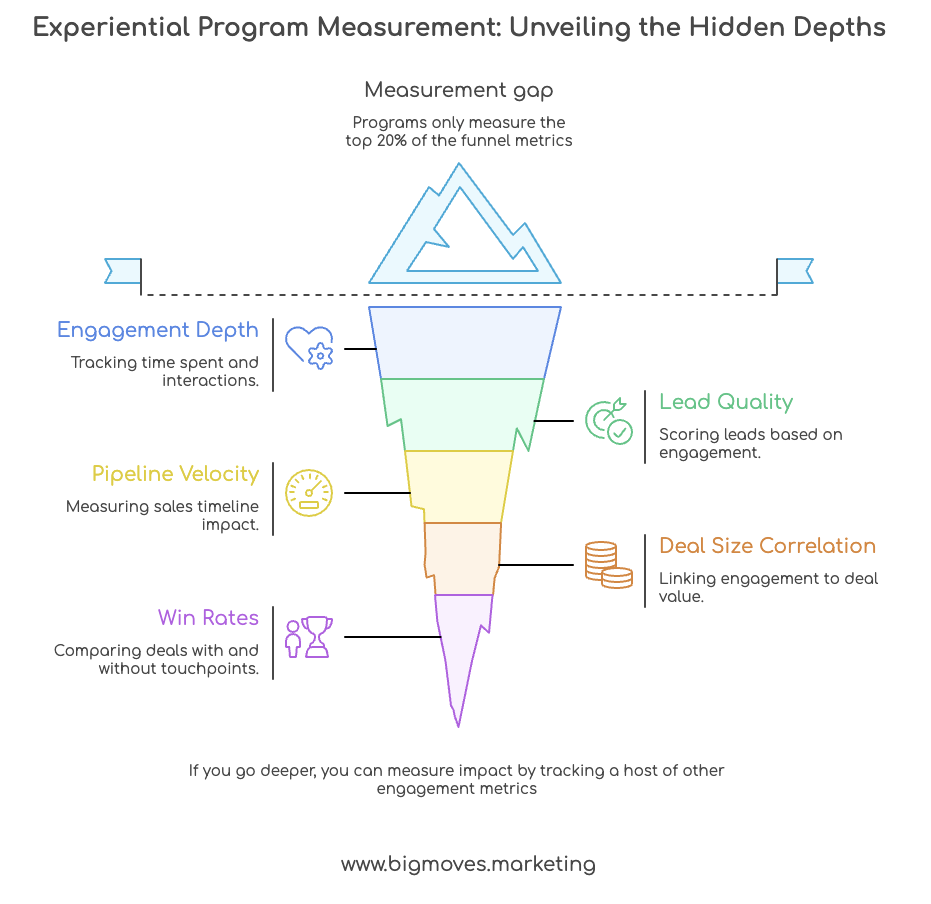
Set up your measurement framework before you launch. Track the right metrics. Prove the value.
You can't scale experiential content without the right tech stack. But here's the trap: don't let technology complexity become an excuse for inaction.
Start simple. Use existing tools:
As you scale, invest in platforms specifically built for interactive content creation. The key is getting started, measuring results, then expanding based on what works.
Let me share some examples of companies that closed the experiential gap and saw real results:
Adobe faced a perception challenge. Many business decision-makers still saw them as just a design tools company, not the holistic enterprise solution provider they'd become with Adobe Experience Cloud.
Their approach? A multi-channel experiential campaign called "Creativity for All." They created:
The results were striking:
By creating experiences rather than just broadcasting messages, Adobe shifted perception and drove measurable business impact.
ZoomInfo invested in a multi-phase awareness campaign centered on "Modern GTM Intelligence." They combined:
Results:
The lesson? Co-branding with trusted ecosystem partners combined with interactive experiences creates credibility at scale.
In another initiative, Adobe worked with TopRank Marketing to create influencer-led experiential content.
The influencer-driven interactive content generated:
This demonstrates the multiplier effect of combining influencer credibility with interactive formats.
Sunbelt Rentals needed to transform from a person-to-person sales model to multichannel digital experiences.
Their experiential approach:
Results:
By making the digital experience interactive and personalized, they transformed buyer behavior and drove real revenue.
Based on current research, here are the experiential formats delivering the highest trust and engagement:
Webinars: Still king. 64% of buyers spend 20-60 minutes with webinar content. The key is making them genuinely interactive, not just presentations with a Q&A tacked on.
Case Studies with Interactive Elements: 42% of buyers cite case studies as most influential, and 73% of B2B decision-makers say they significantly influence purchasing. Make them interactive—let users filter by industry, challenge, or outcome.
Video Content: 93% of video marketers report positive ROI. Add interactive elements and that number climbs. Videos under one minute see 50% engagement rates; videos with interactive elements see 47% higher engagement than non-interactive versions.
ROI Calculators and Assessment Tools: These are lead generation machines when done right. They provide immediate personalized value while qualifying prospects.
Live Events and Virtual Workshops: 78% of B2B marketers allocate budget to experiential marketing, and those who measure impact report stronger pipeline influence.
Let's address the elephant in the room. If experiential content works so well, why isn't everyone doing it?
Yes, experiential content requires more planning than cranking out another blog post. But complexity is relative. Start small:
You don't need to build an entire metaverse experience on day one. Start with one interactive element and build from there.
78% of B2B marketers allocate budget to experiential marketing, but only 30% have mature programs. Budget isn't the primary constraint—it's prioritization.
Consider this: you're already spending money creating static content. What if you redirected 20% of that budget to make existing content interactive? You don't need a massive new budget line—you need to reallocate existing resources toward higher-ROI formats.
Free and low-cost tools exist for creating:
27% haven't measured experiential impact and another 27% are unsure. But measurement isn't harder—it's just different.
Track:
Modern marketing automation and analytics platforms make this tracking straightforward. The key is defining your metrics before launch, not trying to retrofit measurement after the fact.
Here's the real risk: doing nothing while your competitors experiment and learn.
Interactive content generates 2x more engagement. 88% of marketers say it helps differentiate their brand. The risk isn't in trying experiential content—the risk is in continuing to produce the same static content everyone else is producing while expecting different results.
Test and learn. Pick one experiential format. Create it. Measure it. Iterate. The organizations winning in B2B marketing aren't the ones avoiding risk—they're the ones managing risk through disciplined experimentation.
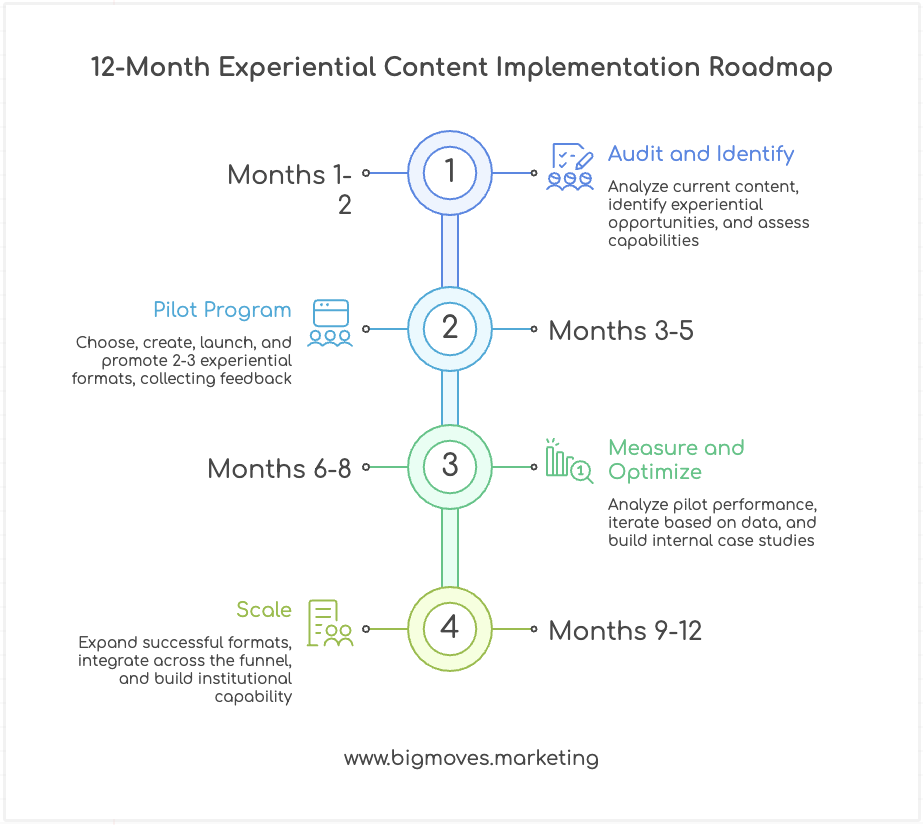
Based on successful programs I've built and consulted on, here's a practical 12-month implementation framework:
Audit your current content portfolio:
Identify experiential opportunities:
Assess capabilities:
Choose 2-3 experiential formats to test:
Start with proven winners. Based on research, I recommend:
Create, launch, and promote:
Example starter projects:
Analyze performance:
Iterate based on data:
Build internal case studies:
Expand successful formats:
Integrate across the funnel:
Build institutional capability:
Here's what's coming that makes experiential content even more critical:
Answer Engine Optimization (AEO) is replacing traditional SEO. As AI assistants like ChatGPT, Perplexity, and Google's AI overviews become primary search interfaces, static content becomes less discoverable. But interactive tools, calculators, and unique experiences? Those still require direct engagement with your brand.
31% of Gen Z now use AI platforms as their primary method for finding information online. When AI can summarize any white paper, your white paper becomes less valuable. But AI can't replicate the experience of using your ROI calculator or attending your live workshop.
Personalization at scale becomes table stakes. 96% of surveyed marketers report that personalized customer experiences have increased sales. Experiential content enables personalization in ways static content never could.
AI makes experiential content creation easier, not harder. Use AI to:
The brands that win won't be those using AI to create more static content. They'll be those using AI to create better experiences faster.
Let's bring this full circle. 78% of B2B marketers believe experiential content increases engagement. Only 30% have mature programs. That 48-point gap represents your opportunity.
Your competitors are stuck in the same patterns: white papers, blog posts, generic webinars that are barely disguised sales pitches. They know they should be doing more, but they're trapped by inertia, perceived complexity, and organizational resistance to change.
Meanwhile, the market is screaming for experiences. Buyers want tools they can use. They want live interactions with real experts. They want to build confidence through hands-on engagement, not passive content consumption.
Here's my challenge to you: Create one piece of experiential content this quarter.
Not ten. Not a massive transformation. Just one.
Pick your most popular piece of static content and make it interactive. Or host one live expert session. Or build one simple calculator. Measure the results. Compare engagement, lead quality, and conversion rates to your static content.
I'm willing to bet you'll see:
The gap exists not because experiential content is hard or expensive or risky. The gap exists because marketing teams are stuck in comfortable patterns while knowing deep down they need to change.
You're not going to close a 48-point industry-wide gap overnight. But you can close your own gap. Start with one experiential content piece. Measure it. Learn from it. Build on it.
The B2B buyers of 2026 don't want more content. They want better experiences. The question is: are you going to give it to them, or will your competitors get there first?
The choice, as it's always been, is yours.
CREDIT: This is an analysis blog onthe originally published article on DesignRush
Explore Big Moves Marketing services and resources:



%20-%20white.svg)